






What's Happening?
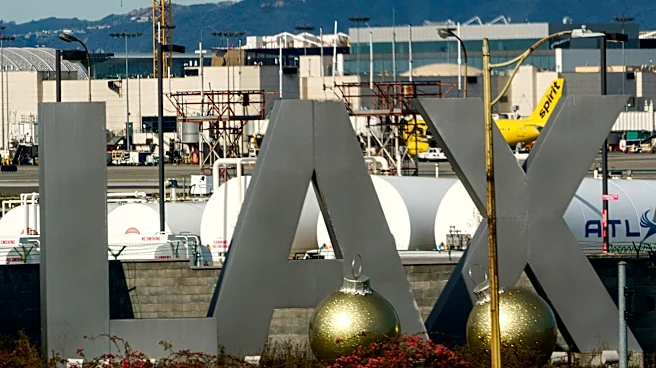
A 44-year-old woman from Woodland Hills, Shamim Mafi, was arrested at Los Angeles International Airport for allegedly trafficking arms on behalf of the Iranian government. According to federal prosecutors, Mafi is accused of brokering the sale of drones,
bombs, bomb fuses, and millions of rounds of ammunition from Iran to the Sudanese Armed Forces. The arrest was announced by First Assistant U.S. Attorney Bill Essayli. Mafi, an Iranian national who became a lawful permanent resident of the United States in 2016, is charged with operating a company in Oman, Atlas International Business, which facilitated these transactions. The company reportedly received over $7 million in payments in 2025. Mafi is expected to make her initial court appearance in U.S. District Court in Los Angeles, where she could face up to 20 years in federal prison if convicted.
Why It's Important?
This arrest highlights ongoing international concerns about arms trafficking and its impact on global conflicts, such as the civil war in Sudan. The involvement of an Iranian national residing in the U.S. underscores the complexities of international law enforcement and the challenges in curbing illegal arms sales. The case also brings attention to the role of intermediary companies in facilitating such transactions, raising questions about regulatory oversight and enforcement. The potential conviction of Mafi could serve as a deterrent to others involved in similar activities and reinforce the U.S. commitment to preventing the proliferation of weapons in conflict zones.
What's Next?
Mafi's upcoming court appearance will be closely watched as it may reveal further details about the network and methods used in the alleged arms trafficking operation. The case could prompt increased scrutiny of companies operating in regions known for arms trade and lead to tighter regulations and enforcement measures. Additionally, the U.S. government may face diplomatic challenges in addressing the involvement of foreign nationals in such activities, potentially impacting international relations with Iran and Sudan.