



What's Happening?
The reliability of the Texas power grid remains a significant topic of discussion, particularly in the context of the 2021 Winter Storm Uri, which led to widespread blackouts and hundreds of deaths. While the Electric Reliability Council of Texas (ERCOT),
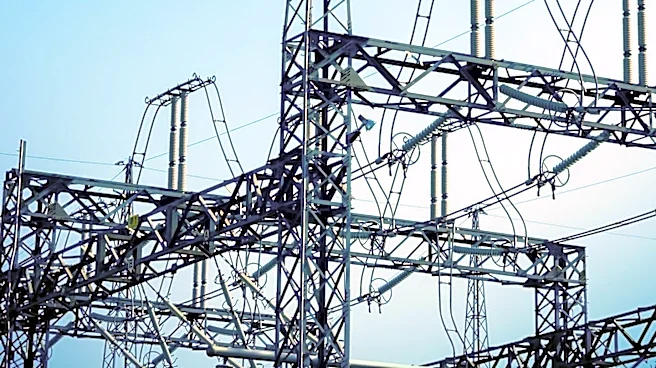
the Public Utility Commission, and the Texas Legislature have implemented numerous reforms since Uri, questions persist about the grid's ability to handle future extreme weather events. Post-Uri, Texas mandated weatherization and inspections for power generators, introduced Firm Fuel Supply Service, and developed new ancillary products like ERCOT Contingency Reserve Service (ECRS) to enhance grid stability. Additionally, there has been a substantial increase in battery storage capacity and upgrades to transmission infrastructure. Despite these efforts, independent analyses suggest that a repeat of Uri-level cold, combined with growing demand from data centers, manufacturing, and electrification, could still necessitate load shedding. The debate highlights the distinction between nameplate capacity and actual dispatchable, fuel-secure capability, emphasizing that simply adding capacity does not guarantee reliability.
Why It's Important?
The ongoing challenges with the Texas power grid have profound implications for the state's economy, its residents, and national energy policy discussions. Texas, with its rapidly growing demand, serves as a critical case study for other grids across the United States. The 2021 blackout underscored the vulnerability of energy systems to extreme weather and the need for robust, reliable power sources. The reforms implemented in Texas, such as mandatory weatherization and increased battery storage, represent significant investments aimed at preventing future catastrophes. However, the continued concern about potential load shedding indicates that these measures may not be sufficient to meet escalating demand and unpredictable weather patterns. This situation affects industries reliant on consistent power, such as manufacturing and data centers, and poses a direct threat to public safety and economic stability during severe weather events. The discussion also brings to light the limitations of traditional energy cost metrics, arguing for a more comprehensive 'Levelized Full System Cost of Energy' that accounts for reliability, backup generation, and the true cost of lost load.
What's Next?
Texas will continue to face the challenge of balancing increasing energy demand with grid reliability, especially as new industries and electrification efforts expand. The effectiveness of recent reforms will be tested by future extreme weather events, such as winter storms and heat domes. The Texas Energy Fund and ongoing interconnection processes are expected to bring more dispatchable megawatts online, but their full impact remains to be seen. The potential retirement of thermal power plants also poses a reliability risk if not adequately replaced by firm, dispatchable alternatives. Policymakers and grid operators will need to continuously evaluate and adapt their strategies to ensure the grid can meet demand under all conditions. The broader energy debate will likely continue to focus on how to accurately price grid resiliency and integrate diverse energy sources without compromising stability, potentially influencing energy policy and investment decisions across other U.S. states.
Beyond the Headlines
The Texas grid's struggles reveal a deeper systemic issue within the U.S. energy landscape: the disconnect between perceived energy costs and actual system reliability. The reliance on metrics like 'Levelized Cost of Electricity' (LCOE) often overlooks crucial factors such as transmission, backup generation, and the costs associated with grid instability. This can lead to policy decisions that prioritize seemingly cheaper energy sources without fully accounting for their impact on overall grid resilience. The Texas experience highlights the ethical imperative of ensuring a reliable power supply, as blackouts disproportionately affect vulnerable populations and can lead to significant loss of life and economic disruption. The ongoing debate in Texas could catalyze a national re-evaluation of how energy systems are planned, funded, and regulated, pushing for a more holistic approach that values resilience as a core product, not just a residual outcome. This shift could lead to significant changes in investment patterns, favoring technologies and infrastructure that enhance grid stability and fuel security.