





What's Happening?
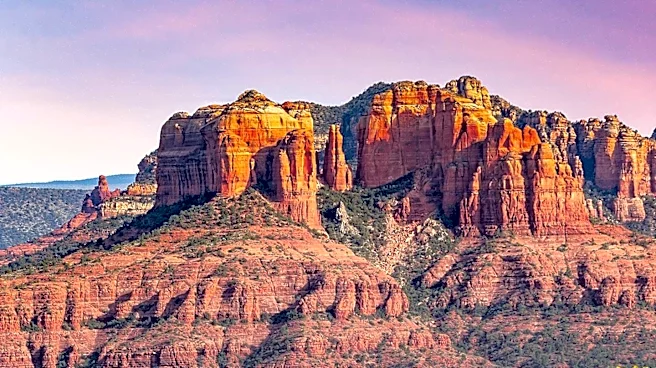
Fodor's, an American travel guide, has released its 2027 'No List,' which includes Sedona, Arizona, among eight destinations travelers should reconsider visiting due to overtourism. The list highlights locations where an excessive influx of tourists is causing
significant strain on local infrastructure, environments, and communities. In Sedona, the issue is particularly acute, with increased shuttle services and new road constructions driving up tourist numbers and, consequently, housing rents. This surge in tourism is forcing local residents to leave the city, impacting the community's fabric. The problem in Sedona mirrors broader global concerns, as seen in Kyoto, Japan, where nearly 17 million entries in 2025 have overwhelmed public infrastructure, and in the Ngorongoro region of Tanzania, where safari tourism is pressuring ecosystems and displacing Maasai communities. These examples underscore a global structural problem where popular destinations struggle to cope with the volume of visitors.
Why It's Important?
The inclusion of Sedona, Arizona, on Fodor's 'No List' is significant for the U.S. tourism industry and local communities. It highlights a growing challenge within popular domestic travel destinations: the delicate balance between economic benefits from tourism and the preservation of local quality of life and environmental integrity. For Sedona, the rising rents and displacement of residents indicate a severe social impact, potentially leading to a loss of community identity and essential local services as residents are priced out. Economically, while tourism brings revenue, unchecked growth can lead to unsustainable practices, infrastructure overload, and a diminished visitor experience in the long run. This situation could prompt other U.S. destinations to proactively address overtourism, considering measures like those in Venice, Italy, which is planning higher entry fees to manage visitor numbers. The trend also signals a potential shift in traveler behavior, with a growing awareness of sustainable tourism practices and the impact of their choices.
What's Next?
Following its inclusion on Fodor's 'No List,' Sedona may face increased scrutiny and pressure to implement more sustainable tourism management strategies. Local authorities could explore various measures, such as regulating short-term rentals, investing in affordable housing initiatives, or introducing visitor caps to alleviate pressure on infrastructure and housing. The experience of other destinations, like Venice's planned entry fees, might serve as a model for managing tourist flows. There could also be a push for more 'intelligent tourism' that prioritizes smaller groups and independent travelers over mass tourism, aiming to reduce congestion and environmental impact. The ongoing dialogue around overtourism could also influence how travel guides and social media platforms promote destinations, potentially encouraging exploration of less-traveled areas or off-peak visits to popular spots. The ultimate goal would be to find a balance that allows tourism to thrive without compromising the well-being of residents or the natural environment.
Beyond the Headlines
The situation in Sedona, as highlighted by Fodor's, points to a deeper ethical and cultural dilemma within the tourism industry. The pursuit of economic growth through tourism often overlooks the social cost borne by local communities. The displacement of residents due to rising housing costs, driven by tourist demand, raises questions about equitable development and the right to remain in one's hometown. Furthermore, the environmental strain, such as increased traffic and resource consumption, challenges the notion of tourism as a universally beneficial industry. This development could trigger a broader re-evaluation of tourism models, moving towards regenerative tourism that actively contributes to the well-being of destinations and their inhabitants, rather than merely extracting value. It also underscores the power of travel publications and social media in shaping public perception and influencing travel patterns, thereby placing a greater responsibility on these entities to promote mindful and sustainable travel.