






What's Happening?
Sobir Kurbanov, an international development professional with extensive experience at the World Bank Group and IMF, highlights the critical link between water scarcity and capital liquidity in landlocked Eurasia, particularly in the Caucasus and Central
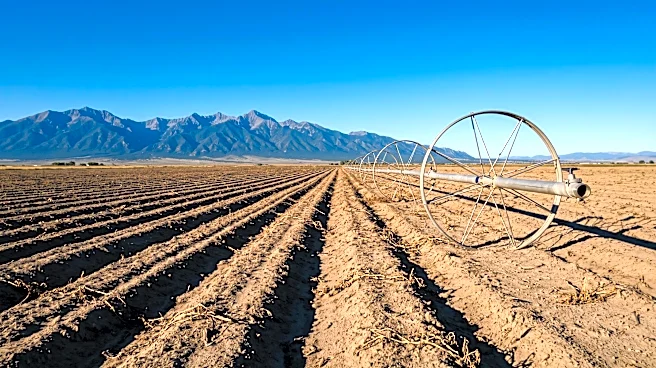
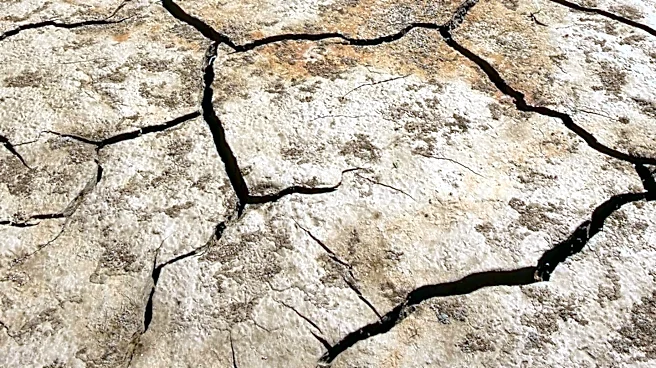
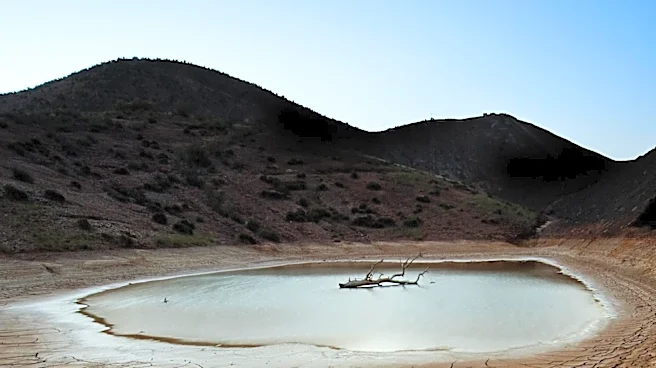
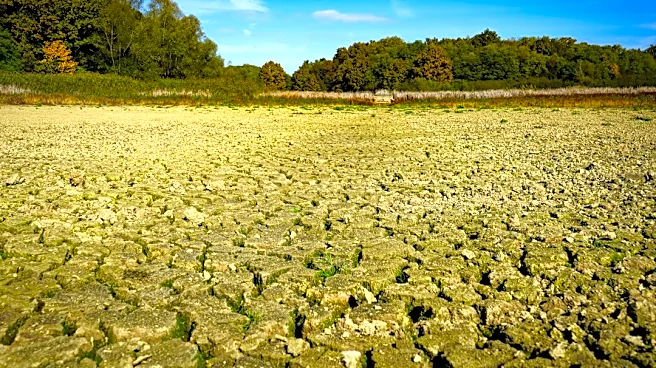
Asia. These regions are experiencing rising heat, increased evaporation, melting glaciers, and declining rivers, leading to less available water for growing aspirations. Kurbanov emphasizes that water, much like energy, underpins most value chains including food, power, industry, transport, and urban development. The assumption of abundant water, on which historical development models were founded, is no longer valid. This decline in water resources forces difficult choices regarding development priorities. The World Bank's framework suggests that data centers, while seemingly low water consumers globally, can significantly impact water-stressed basins due to their direct cooling needs and substantial indirect water demand from electricity generation, which can account for 80% or more of their overall water footprint. Countries like Armenia and Uzbekistan, considering investments in data centers, must integrate water availability into their investment decisions.
Why It's Important?
The dwindling water supply in Eurasia poses a significant threat to economic development and capital investment across various sectors. For the U.S. and international investors, this situation implies increased risks for projects in the region, particularly in water-intensive industries like mining and data centers. The World Bank advocates for a watershed-informed investment model, urging governments to assess water availability and economic value before approving large-scale projects. This approach is crucial to prevent competition for scarce water resources between industries, households, and agriculture. The long-term viability of infrastructure projects, including those supporting the Trans-Caspian or Middle Corridor, is also at risk from declining water levels, potentially leading to 'stranded assets' if climate and water risks are not systematically incorporated into feasibility studies. The need for robust regional coordination on water and climate issues is paramount, as national policies alone are insufficient to address transboundary challenges like glacier retreat and river flow changes.
What's Next?
Governments in Eurasia, particularly in the Caucasus and Central Asia, are urged to adopt more comprehensive and regionally coordinated strategies to manage water resources. This includes implementing watershed-informed investment models, transparent monitoring of industrial water use, and promoting efficient cooling technologies and water recycling in new developments like data centers. The World Bank and other International Financial Institutions (IFIs) are increasingly integrating climate risk into project appraisals, suggesting that future investments will require more rigorous stress-testing against various climate scenarios, including higher temperatures and droughts. For long-term infrastructure projects, such as nuclear power plants, water availability assessments must consider conditions decades into the future. The challenge for governments and investors will be to establish realistic water-pricing and risk-assessment frameworks that account for the true long-term costs of water and climate resilience, potentially requiring risk-sharing, blended finance, and IFI support for water-efficient investments.
Beyond the Headlines
The escalating water crisis in Eurasia highlights a broader global challenge where climate change directly impacts economic stability and investment viability. The ethical dimension of resource allocation becomes critical as countries balance industrial development with the fundamental needs of their populations and agriculture. The concept of 'water circularity' and the integration of advanced technologies, such as AI for water monitoring and optimization, are emerging as essential components of sustainable development. This situation also underscores the limitations of national sovereignty in addressing transboundary environmental issues, necessitating a shift towards stronger regional governance and cooperation. The potential for 'stranded assets' due to environmental changes could redefine investment strategies and risk assessment in regions vulnerable to climate impacts, pushing for a re-evaluation of long-term project planning and financing mechanisms to incorporate climate resilience as a core component rather than an optional add-on.