











What's Happening?
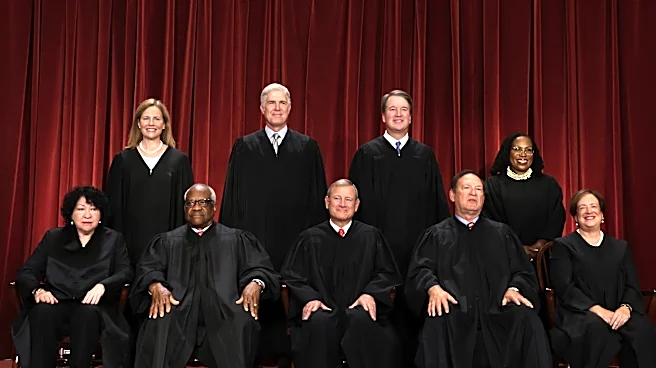
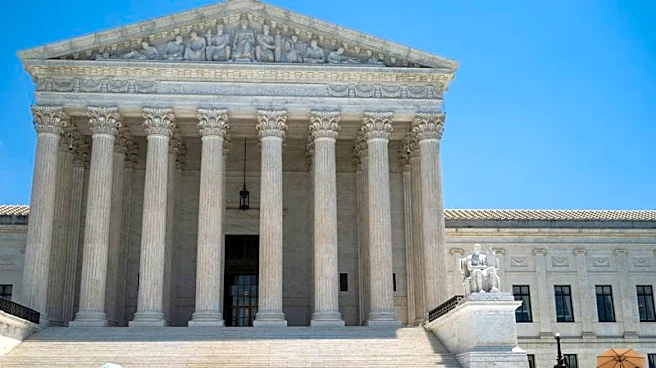
The Supreme Court has allowed Texas to enforce age verification and parental consent requirements for app downloads by minors, despite ongoing legal challenges. This decision is seen as a setback for big tech companies, as the law imposes new regulatory
burdens on app stores. The law, which was initially blocked by a federal judge, was reinstated by an appeals court in June. It requires app stores to verify if users are under 18 and mandates parental consent for app downloads. The law is part of Texas's efforts to protect minors' data, safety, and privacy in the digital world, drawing parallels to regulations on alcohol and cigarettes.
Why It's Important?
The Supreme Court's decision underscores the tension between state regulatory efforts and the tech industry's push for minimal restrictions on digital content. This ruling could influence other states considering similar legislation, potentially leading to a patchwork of regulations that tech companies must navigate. The decision also raises questions about the balance between protecting minors and preserving free speech rights, as critics argue that the law could lead to broader government regulation of internet content. The outcome of this case could have significant implications for how digital platforms manage user data and content access.
What's Next?
As the case proceeds in lower courts, further legal challenges are expected from tech companies and civil rights groups. These stakeholders argue that the law infringes on free speech rights and could lead to excessive government control over digital content. The ongoing litigation will likely explore the constitutional implications of the law, with potential appeals to higher courts. The Supreme Court's eventual ruling could set a precedent for future digital content regulation, influencing how states and tech companies address minors' online safety and privacy.