






What's Happening?
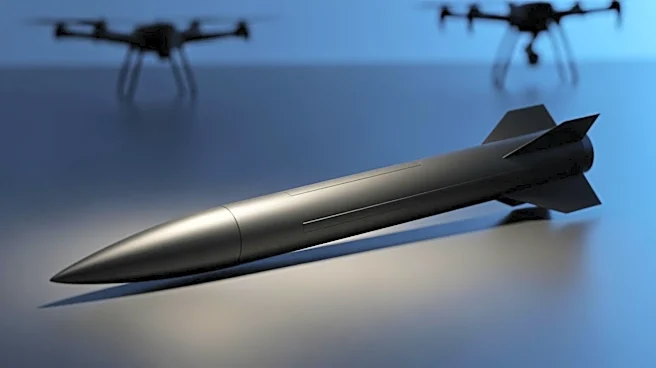
Iran's 358 missile, also known as the SA-67, has gained attention for its effectiveness in targeting and destroying expensive US drones, such as the MQ-9 Reaper. This missile, weighing approximately 50kg, is powered by a micro-turbojet and solid rocket
booster, allowing it to cruise subsonically at about Mach 0.6 for distances between 100-150km. It uses an infrared seeker for target guidance. Despite its relatively slow speed compared to conventional surface-to-air missiles, which often exceed Mach 3, the 358 missile has proven effective against slower-flying, turboprop-powered drones. The missile's low cost, reportedly one-tenth that of conventional air-defense munitions with similar range and firepower, is a significant advantage, making it a cost-effective solution for counter-drone operations.
Why It's Important?
The success of Iran's 358 missile highlights a shift in military strategy, emphasizing cost-effective solutions in modern warfare. This development is significant for the U.S. military and its allies, as it challenges the effectiveness of high-cost drones against cheaper, yet efficient, countermeasures. The ability of the 358 missile to neutralize expensive assets like the MQ-9 Reaper could lead to a reevaluation of current defense strategies and investments in drone technology. Additionally, this situation underscores the importance of developing more advanced countermeasures to protect high-value military assets from low-cost threats. The implications extend beyond the battlefield, potentially influencing defense budgets and procurement strategies in the U.S. and allied nations.
What's Next?
The continued success of the 358 missile may prompt the U.S. and its allies to accelerate the development of advanced counter-drone technologies. This could involve investing in new research and development to create more resilient and adaptable drone systems capable of evading or countering such threats. Additionally, there may be increased diplomatic efforts to address the proliferation of such cost-effective military technologies, particularly in regions of strategic interest. The U.S. defense industry might also see a shift in focus towards enhancing the survivability and effectiveness of existing drone platforms, potentially leading to new collaborations and innovations in military technology.