



What's Happening?
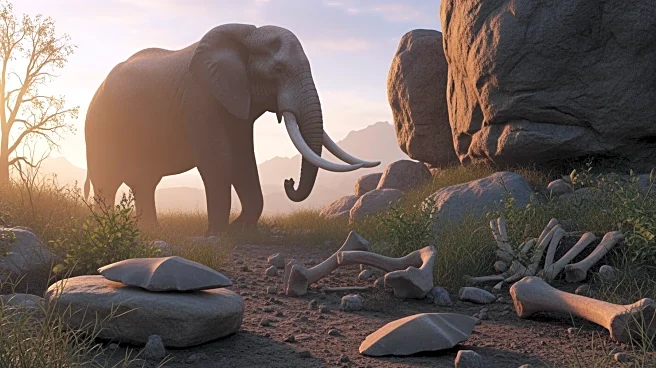
A recent study has provided new insights into the hunting practices of Neanderthals by examining the remains of straight-tusked elephants (Palaeoloxodon antiquus) found at the Neumark-Nord site in Germany. Researchers from Germany, the Netherlands, and the United
States used innovative methods, including isotope and protein analysis, to study the teeth of these ancient elephants. The findings suggest that these elephants traveled long distances across Europe, with some covering up to 300 kilometers. The study also revealed that Neanderthals engaged in organized hunting of these large animals, indicating a sophisticated understanding of their environment and social cooperation. The research highlights the complex interactions between Neanderthals and their ecosystem during the Pleistocene era.
Why It's Important?
This study is significant as it challenges previous assumptions about Neanderthal behavior, suggesting they were more advanced in their hunting strategies and social organization than previously thought. The ability to hunt large prey like elephants implies a high level of planning and cooperation, which could reshape our understanding of Neanderthal society. Additionally, the research provides valuable data on the migration patterns and ecological impact of large mammals in prehistoric Europe, contributing to broader paleontological and archaeological knowledge. These insights could influence how scientists interpret the ecological and social dynamics of ancient human populations.