
What's Happening?
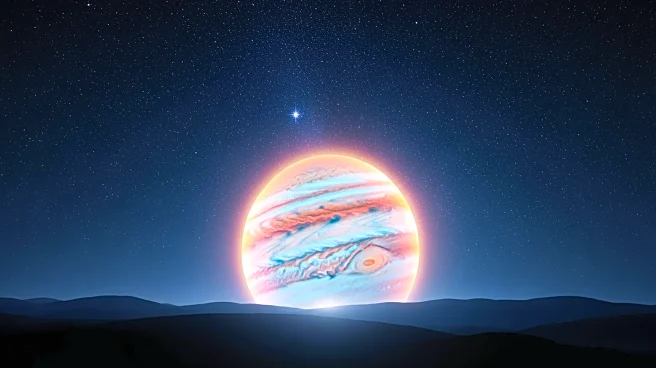
Jupiter is set to provide a spectacular celestial display this January as it reaches opposition, a position where it is directly opposite the Sun from Earth's perspective. This alignment makes Jupiter appear
brighter and more prominent in the night sky, visible from dusk to dawn. The event coincides with the Quadrantids meteor shower, enhancing the viewing experience for amateur astronomers. The planet's steady glow, unlike the flickering of stars, makes it easily identifiable even in urban areas. Observers can use binoculars to view Jupiter's four largest moons: Io, Europa, Ganymede, and Callisto. The peak of this celestial event occurs on January 10, when Jupiter reaches full opposition, and on January 4, it will appear near the full moon, creating a photogenic scene.
Why It's Important?
This event is significant for both amateur and professional astronomers as it provides a rare opportunity to observe Jupiter in optimal conditions. The planet's brightness and position make it accessible to a wide audience, encouraging public interest in astronomy. The alignment with the Quadrantids meteor shower adds to the spectacle, offering a chance to witness up to 200 meteors per hour under ideal conditions. This celestial event not only enhances public engagement with space science but also provides educational opportunities for schools and science centers to promote astronomy.
What's Next?
Following the peak viewing period in early January, Jupiter will continue to be visible throughout the month, allowing for extended observation opportunities. Astronomy clubs and observatories may organize public viewing events to capitalize on the heightened interest. Additionally, the ongoing visibility of Jupiter and the meteor shower could inspire further interest in upcoming celestial events, fostering a sustained engagement with astronomy.
Beyond the Headlines
The visibility of Jupiter and its moons offers a chance to discuss the planet's role in the solar system and its significance in scientific research. The event also highlights the importance of dark sky preservation, as light pollution can hinder the ability to observe such celestial phenomena. This could lead to increased advocacy for policies that protect night skies, benefiting both professional research and public enjoyment.