
What's Happening?
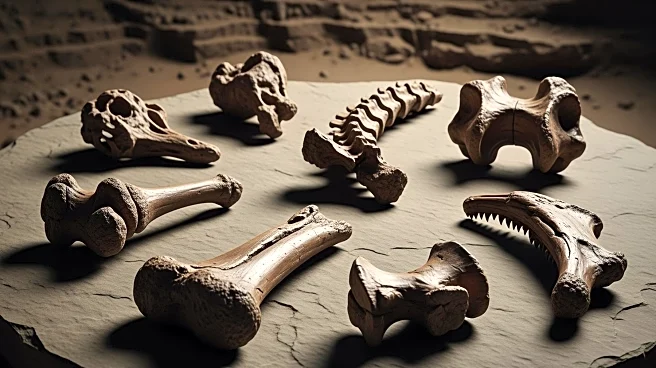
In 2025, palaeontologists uncovered six remarkable new dinosaur species, including a Velociraptor relative and a dome-headed pachycephalosaur. Among the discoveries is Joaquinraptor casali, a new species of
megaraptor found in Patagonia, notable for its formidable thumb claw. Another significant find is Zavacephale rinpoche, the oldest dome-headed dinosaur discovered in Mongolia. The discoveries also include Spicomellus afer, a heavily armoured ankylosaur from Morocco, and Baminornis zhenghensis, a potential early bird species from China. These findings provide new insights into the diversity and evolution of dinosaurs.
Why It's Important?
These discoveries significantly enhance our understanding of dinosaur evolution and diversity, offering new perspectives on the ecological niches these creatures occupied. The identification of Joaquinraptor casali, with its unique physical attributes, challenges previous assumptions about predator dynamics during the Cretaceous period. Similarly, the discovery of Baminornis zhenghensis could reshape theories about the evolution of birds, suggesting that certain avian characteristics developed earlier than previously thought. These findings contribute to the broader scientific narrative of Earth's prehistoric life and underscore the importance of continued paleontological research.