
What's Happening?
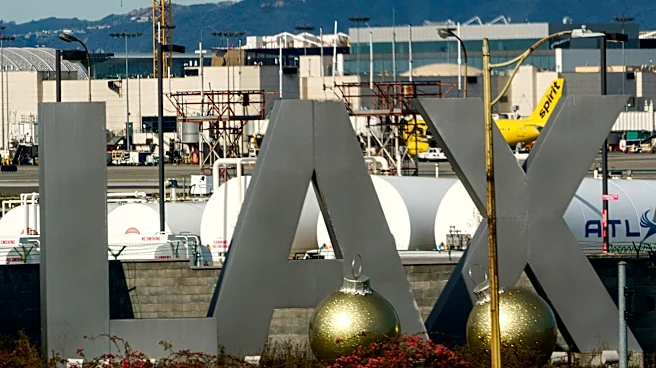
Shamim Mafi, a 44-year-old resident of Woodland Hills, Los Angeles, was arrested at Los Angeles International Airport on suspicion of trafficking weapons for the Iranian government to contacts in Africa,
including Sudan. Mafi, an Iranian national and lawful permanent U.S. resident since 2016, is accused of brokering the sale of drones, bombs, bomb fuses, and millions of rounds of ammunition. The transactions were allegedly conducted through her company, Atlas International, with a co-conspirator. One significant deal involved the sale of Iranian-manufactured drones to Sudan's Ministry of Defense, valued at over €60 million. Mafi reportedly earned €6 million for coordinating the Sudanese delegation's travel to Iran. If convicted, she faces up to 20 years in federal prison. Mafi is expected to appear in court on Monday.
Why It's Important?
This arrest highlights the ongoing international concerns regarding arms trafficking and the role of individuals in facilitating such activities. The case underscores the complex geopolitical dynamics involving Iran and Sudan, particularly in the context of Sudan's ongoing civil war, which has resulted in significant civilian casualties and displacement. The involvement of a U.S. resident in these activities raises questions about national security and the effectiveness of monitoring and preventing illegal arms deals. The case could have implications for U.S.-Iran relations and may influence future policy decisions regarding arms control and international sanctions.
What's Next?
Mafi's court appearance will likely provide more details about the extent of her involvement and the operations of Atlas International. The case may prompt further investigations into similar activities and could lead to increased scrutiny of individuals and companies suspected of engaging in arms trafficking. The U.S. government may also consider additional measures to prevent such activities and strengthen international cooperation to combat illegal arms trade. The outcome of this case could influence future legal and diplomatic actions concerning arms trafficking and international security.