








What's Happening?
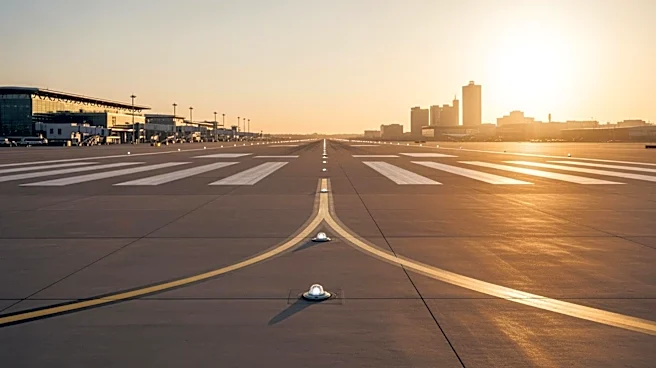
The Federal Aviation Administration (FAA) has announced a series of infrastructure grants aimed at enhancing several U.S. airports. These grants include $70 million for runway rehabilitation at Dallas-Fort Worth International Airport, $46.9 million for apron
expansion at Charlotte Douglas International Airport, and $41.9 million for terminal reconstruction and fuel farm expansion at Miami International Airport. Additional funding includes $18.7 million for deicing infrastructure at Syracuse Hancock International Airport, $18 million for taxiway pavement reconstruction at Philadelphia International Airport, and $16.2 million for a taxiway extension at Orlando Sanford International Airport. These grants are part of a broader effort to improve airport infrastructure across the country.
Why It's Important?
These infrastructure grants are crucial for maintaining and enhancing the operational efficiency and safety of major U.S. airports. By investing in runway rehabilitation, terminal reconstruction, and other critical infrastructure, the FAA aims to support the growing demand for air travel and ensure that airports can accommodate future traffic increases. This funding is expected to create jobs and stimulate economic activity in the regions surrounding these airports. Additionally, improved airport infrastructure can lead to better passenger experiences, reduced delays, and increased capacity for airlines, which is vital for the competitiveness of the U.S. aviation industry.
What's Next?
As these projects commence, airports will likely experience construction-related disruptions, but the long-term benefits are expected to outweigh the temporary inconveniences. The FAA and airport authorities will need to coordinate closely to minimize impacts on travelers and ensure that projects are completed on schedule. Stakeholders, including airlines and local businesses, will be monitoring the progress of these upgrades, as they stand to benefit from improved airport facilities. The successful completion of these projects could set a precedent for future infrastructure investments in the aviation sector.