

What's Happening?
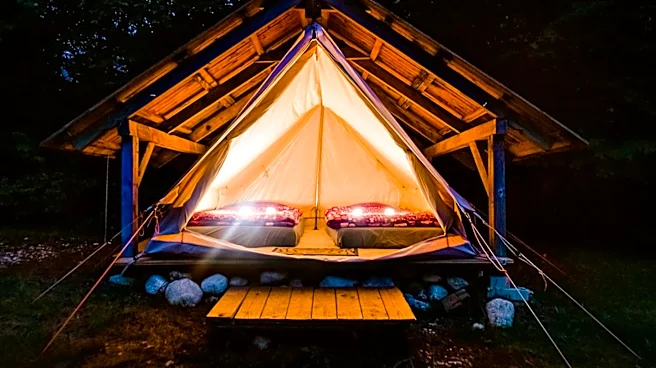
Wekiwa Springs State Park in Apopka, Florida, has launched four new air-conditioned glamping tents, offering visitors a comfortable alternative to traditional camping. These tents, managed by concessionaire Adventures Unbound by Guest Services, are equipped
with a queen bed, a twin futon, linens, a coffee maker, and an ice chest, alongside air conditioning and heating. Reservations for these units range from $119 to $169 per night, plus a mandatory $7 nightly electric fee that includes park admission. This initiative is part of a broader regional expansion of eco-glamping, with additional tents also being introduced at Rainbow Springs State Park and other Florida state parks like Lake Louisa, Lake Kissimmee, and Topsail Hill Preserve. The park, known for its second-magnitude spring discharging 42-43 million gallons of freshwater daily, has a long history as a tourist attraction and is part of the federally designated Wekiva River system.
Why It's Important?
The introduction of AC glamping tents at Wekiwa Springs State Park signifies a growing trend in the U.S. tourism and outdoor recreation industry, catering to a wider demographic seeking comfort alongside nature. This move could boost state park revenue and attract visitors who might otherwise avoid traditional camping, thereby increasing engagement with natural environments. However, it also highlights the delicate balance between enhancing visitor experience and preserving sensitive ecosystems. The Wekiwa Springs area is already undergoing conservation efforts, such as the Septic Tank Retrofit Project, to protect its river ecosystem. The increased recreational use, driven by new amenities like glamping, could put additional pressure on these natural resources, requiring careful management to prevent environmental degradation. The involvement of third-party concessionaires for booking and management also indicates a shift in how state parks are monetizing and operating certain facilities, potentially leading to more diverse offerings but also raising questions about oversight and profit sharing.
What's Next?
The expansion of glamping facilities across Florida state parks is likely to continue, with Adventures Unbound and similar concessionaires potentially introducing more units in other popular natural areas. This trend could lead to increased visitor numbers and revenue for state parks, but also necessitates ongoing evaluation of environmental impact and resource management strategies. Local agencies will need to closely monitor the effects of increased tourism on the Wekiva River system and other sensitive habitats, potentially implementing further protective measures or adjusting visitor capacities. The success of these glamping ventures may also influence policy decisions regarding public-private partnerships in state park management, potentially leading to more concessionaire-operated amenities. Travelers can expect more diverse accommodation options in Florida's state parks, though booking processes may vary between state-run and concessionaire-managed sites.
Beyond the Headlines
The rise of eco-glamping in U.S. state parks reflects a broader societal shift towards experiential travel and a desire for comfort even in outdoor settings. This trend challenges traditional notions of 'roughing it' in nature, potentially democratizing access to natural spaces for individuals who prefer amenities over primitive camping. However, it also raises ethical considerations regarding the commercialization of public lands and the potential for increased ecological footprints. The balance between providing luxurious experiences and maintaining the pristine nature of state parks will be a continuous challenge. Furthermore, the reliance on third-party operators for these services could lead to debates about equitable access, pricing, and the core mission of state parks to provide affordable public recreation. This development could also inspire other states to adopt similar models, transforming the landscape of outdoor recreation across the nation.