





What's Happening?
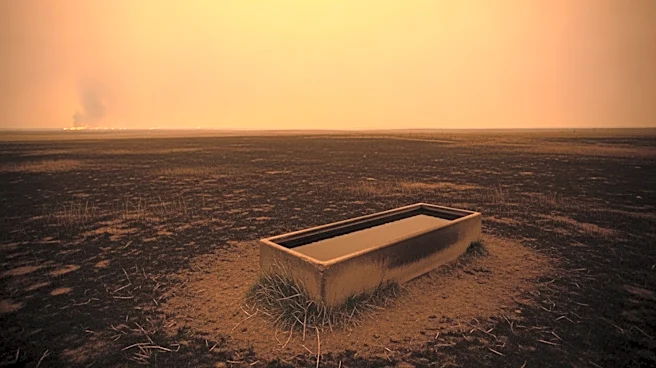
The American Great Plains, a critical region for U.S. beef production, has been severely affected by record-breaking wildfires. In Nebraska, the Morrill fire alone consumed over 642,000 acres, marking the largest blaze in the state's history. These fires have
been fueled by a combination of rising temperatures, dry conditions, and strong winds. The devastation has resulted in significant livestock losses, with more than 10,000 cattle deaths reported in Texas during a previous wildfire. The fires have also destroyed miles of fencing and forage, leaving the land barren and impacting the cattle industry's feeding operations. Experts note that while wildfires are a natural part of the grassland ecosystem, the increasing frequency and intensity pose new challenges for land management and recovery.
Why It's Important?
The wildfires in the Great Plains have significant implications for the U.S. cattle industry, which is concentrated in this region. The destruction of grazing lands threatens the livelihoods of ranchers and could lead to long-term economic impacts if the grasses do not recover quickly. Nebraska, a top cattle-producing state, faces particular challenges as the fires have left large areas unsuitable for grazing. The situation highlights the need for improved land management practices to mitigate the risks of future fires. Additionally, the fires underscore the broader issue of climate change, as rising temperatures and changing weather patterns contribute to the increasing severity of wildfires.
What's Next?
Recovery efforts are underway, with ranchers hoping for favorable weather conditions to aid in the regrowth of grasses. The upcoming wet season will be crucial; however, if rains are insufficient or too intense, the affected communities may continue to struggle. There is also a push for changes in land management practices to better coexist with the natural fire cycles of the grasslands. This includes addressing the encroachment of woody shrubs and trees, which increase fire risks. The situation calls for a balance between preserving the natural ecosystem and supporting the economic needs of the cattle industry.
Beyond the Headlines
The wildfires bring attention to the delicate balance between human activity and natural ecosystems. Historically, Indigenous practices included controlled burns to manage the grasslands, a method that could inform modern land management strategies. The fires also highlight the interconnectedness of climate change, land use, and economic stability. As the world continues to warm, regions like the Great Plains may face more frequent and severe natural disasters, necessitating a reevaluation of current practices and policies to ensure resilience and sustainability.