




What's Happening?
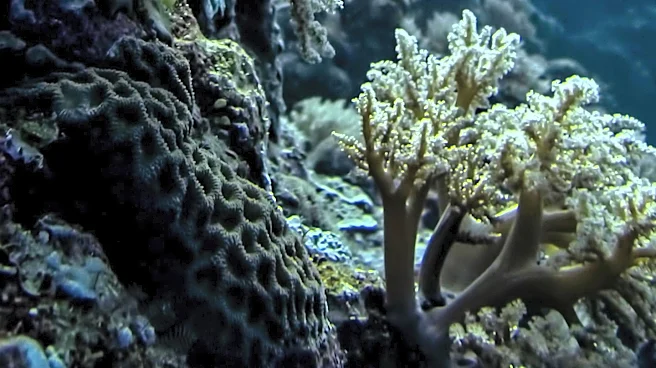
Marine ecologists Mollie Asbury and Tye Kindinger have highlighted the urgent crisis facing coral reefs worldwide due to accelerated bleaching events. The frequency of these events has increased, reducing the recovery time for reefs from a decade to just
a few years. This rapid succession of bleaching events does not allow coral communities sufficient time to rebuild, posing a significant threat to their survival. The scientists emphasize that protecting healthy reefs and reducing local pressures, such as pollution and overfishing, can improve the resilience of these ecosystems, which are crucial for food security, fisheries, and coastal protection.
Why It's Important?
The accelerated bleaching of coral reefs has profound implications for marine biodiversity and the human communities that rely on these ecosystems. Coral reefs support a vast array of marine life and are essential for the livelihoods of millions of people worldwide. The loss of coral reefs would lead to a decline in fish populations, affecting food security and economic stability in coastal regions. Additionally, reefs provide natural protection against storm surges and erosion, making their preservation critical for coastal resilience in the face of climate change.
What's Next?
Efforts to mitigate the impact of coral bleaching will likely focus on enhancing reef resilience through conservation strategies and reducing local stressors. This includes establishing marine protected areas, promoting sustainable fishing practices, and reducing pollution. International collaboration and funding will be essential to support these initiatives and ensure the long-term survival of coral reefs. Continued research into the factors that contribute to reef resilience will also be crucial in developing effective conservation strategies.