






What's Happening?
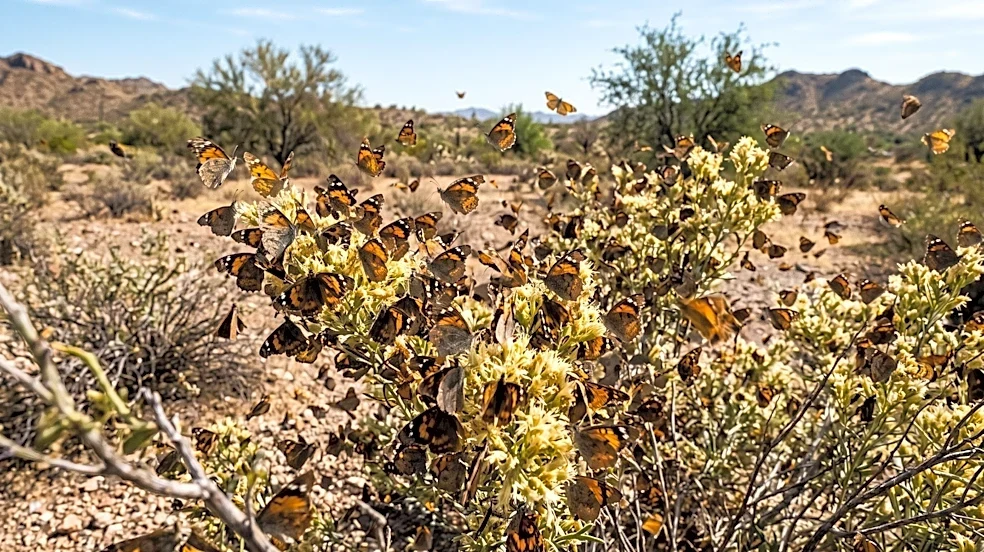
The Sonoran Desert is currently experiencing its most significant influx of American Snout butterflies since 2021. This phenomenon is characterized by massive, synchronized population explosions triggered by heavy rains following dry spells. The abundance
of fresh foliage from hackberry trees, the primary host plant for their caterpillars, leads to localized breeding booms and migratory movements. Hundreds of thousands of these butterflies are now gathering in yards and on flowering desert plants, particularly swarming around Desert Broom, which produces yellowish-white blossoms that attract them. Local nature enthusiasts and news reports have identified several regional hotspots for observing these swarms, including Sabino Canyon, Madera Canyon, Agua Caliente Park, Tohono Chul, and Mission Garden.
Why It's Important?
This large influx of American Snout butterflies is significant for several ecological and observational reasons. Ecologically, it demonstrates a direct and rapid response of insect populations to specific climatic conditions, highlighting the intricate balance within desert ecosystems. The population boom provides an abundant food source for various insectivorous animals, potentially impacting local food webs. For nature enthusiasts and the general public, it offers a rare and spectacular natural event, fostering appreciation for local biodiversity and natural phenomena. It also presents an opportunity for citizen science, allowing individuals to observe and report on the migration, contributing to a broader understanding of butterfly ecology and migration patterns. The event underscores the importance of preserving native plant species like hackberry trees and desert broom, which are crucial for supporting these butterfly populations.
What's Next?
The current influx of American Snout butterflies is expected to continue as long as favorable conditions persist, primarily the availability of host plants and nectar sources. As the season progresses and environmental conditions change, the butterfly populations will naturally decline or migrate further. Researchers and local wildlife organizations will likely monitor the duration and extent of this phenomenon, potentially collecting data on population density, migration routes, and environmental triggers. Public interest in observing these butterflies is expected to remain high, with local nature centers and parks continuing to be popular viewing spots. This event may also prompt educational initiatives to inform the public about the ecological role of these butterflies and the importance of preserving their habitats within the Sonoran Desert.
Beyond the Headlines
The dramatic surge in American Snout butterfly populations offers a compelling case study in ecological resilience and the immediate impacts of climate variability. While seemingly a beautiful natural spectacle, it also subtly highlights the sensitivity of ecosystems to weather patterns, particularly in arid regions. Such population explosions, while natural, can also be seen as indicators of environmental shifts. The phenomenon could spark deeper discussions about the long-term effects of changing rainfall patterns on desert flora and fauna, and how these shifts might alter species distribution and abundance. Furthermore, it underscores the value of citizen science and local ecological knowledge in tracking and understanding these natural events, contributing to broader conservation efforts and ecological research. The event serves as a reminder of the dynamic and often unpredictable nature of the natural world, even in seemingly stable environments.