








What's Happening?
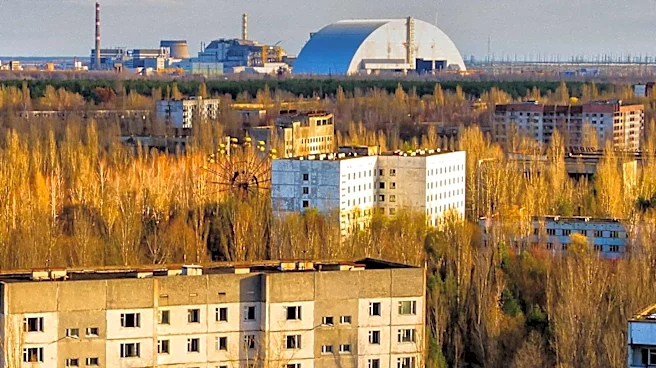
A black fungus, Cladosporium sphaerospermum, has been discovered thriving in the Chernobyl exclusion zone, an area known for its high levels of ionizing radiation. This fungus, found clinging to the interior walls of one of the most radioactive buildings
on Earth, appears to utilize a process similar to photosynthesis, termed radiosynthesis, to harness ionizing radiation. The fungus's dark pigment, melanin, is believed to play a crucial role in this process. Despite the harsh conditions, C. sphaerospermum not only survives but seems to flourish in the presence of radiation, a phenomenon that has intrigued scientists since its discovery in the late 1990s. Research led by microbiologist Nelli Zhdanova and further studies by radiopharmacologist Ekaterina Dadachova and immunologist Arturo Casadevall have explored this unique adaptation, although the exact mechanisms remain elusive.
Why It's Important?
The discovery of C. sphaerospermum's ability to thrive in radioactive environments has significant implications for understanding life in extreme conditions. This fungus's unique adaptation could inform the development of new technologies for radiation protection, potentially benefiting space exploration and nuclear safety. The ability to harness ionizing radiation could lead to innovative applications in biotechnology and environmental remediation. Furthermore, the study of such organisms enhances our understanding of life's resilience and adaptability, offering insights into potential life forms on other planets with harsh environments.
What's Next?
Future research aims to unravel the precise mechanisms behind C. sphaerospermum's radiosynthesis and its potential applications. Scientists are particularly interested in exploring the fungus's use as a biological radiation shield, which could be pivotal for long-term space missions. Additionally, understanding how this fungus neutralizes radiation could lead to breakthroughs in protecting human health and the environment from radioactive contamination. Continued studies will focus on identifying the metabolic pathways involved and the potential for carbon fixation driven by ionizing radiation.
Beyond the Headlines
The phenomenon of radiosynthesis challenges traditional views of energy conversion in biological systems, suggesting that life can adapt to utilize energy sources previously thought inhospitable. This discovery raises questions about the evolutionary processes that enable such adaptations and the potential for undiscovered life forms in extreme environments. The ethical implications of harnessing such organisms for human benefit also warrant consideration, particularly in terms of environmental impact and biosafety.