
What's Happening?
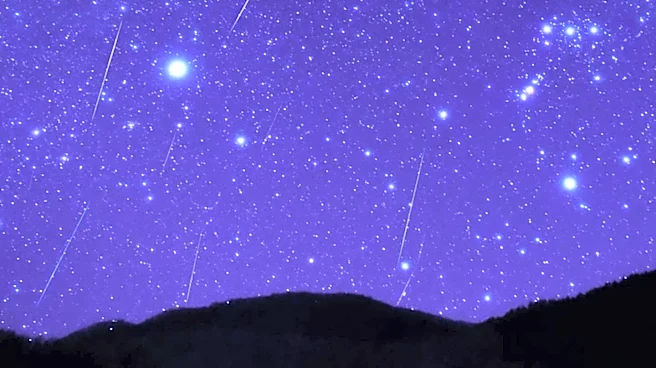
The Taurid meteor shower is expected to offer a unique celestial display on November 11, 2026, particularly over East Texas. Unlike many other meteor showers, the Taurids are known for producing slow-moving
meteors that can appear as larger, longer-lasting explosions of color and light. While most shooting stars are fleeting, Taurid meteors can remain visible for 2-3 seconds or more. This phenomenon is attributed to their relatively slower speed of approximately 18 miles per second (65,000 mph) compared to other meteors. The prime viewing night is November 11, coinciding with a waxing crescent moon phase that will provide only 5% illumination, ensuring a dark sky for optimal viewing. Experts recommend finding a location away from light sources and allowing at least 15 minutes for eyes to adjust to the darkness.
Why It's Important?
This astronomical event provides a unique opportunity for public engagement with science and space observation across the U.S., particularly in regions like East Texas. The distinct characteristics of the Taurid meteors, such as their slow speed and prolonged visibility, make them particularly accessible and captivating for amateur stargazers and the general public. Such events can inspire interest in STEM fields among younger generations and foster a greater appreciation for natural phenomena. For local communities, meteor showers can also boost tourism, as people travel to areas with minimal light pollution for better viewing experiences. The emphasis on avoiding light sources and phone screens for optimal viewing also subtly promotes a temporary disconnection from digital devices, encouraging a more direct interaction with the natural world.
What's Next?
Individuals interested in observing the Taurid meteor shower should plan to find a dark viewing location on the night of November 11, 2026. It is advisable to check local weather forecasts for clear skies. Educational institutions and astronomical clubs might organize public viewing events or provide guidance on how to best observe the shower. Following this event, astronomers and space enthusiasts will continue to anticipate other annual meteor showers, such as the Perseids, Geminids, and Leonids, which also offer significant viewing opportunities throughout the year. The data collected from public observations, though informal, can contribute to a broader understanding of meteor shower patterns and characteristics.
Beyond the Headlines
The allure of meteor showers like the Taurids extends beyond scientific observation, touching upon cultural and historical narratives. Throughout history, celestial events have often been imbued with spiritual or symbolic meaning, influencing art, literature, and folklore. In modern times, while scientific understanding has demystified these phenomena, the sense of wonder and connection to the vastness of the universe remains. The act of stargazing, particularly during a meteor shower, offers a communal experience that transcends individual differences, fostering a shared sense of awe. It also serves as a reminder of Earth's place within the solar system and the continuous cosmic processes that shape our environment, encouraging a broader perspective on human existence and our planet's delicate balance.