










What's Happening?
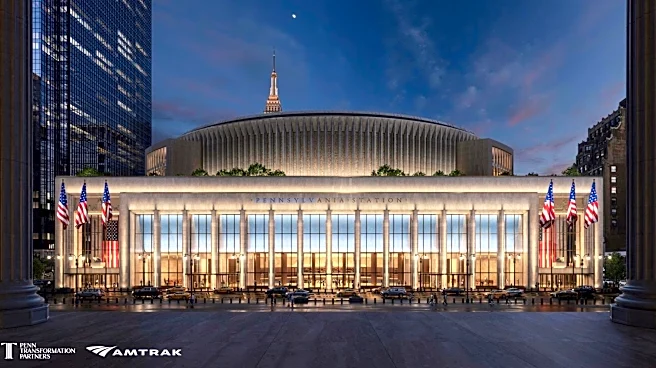
New York City's Grand Central Terminal is serving as a key inspiration for the redesign of Pennsylvania Station, as the project reaches a significant milestone. The renovation, led by Amtrak and supported by the U.S. Department of Transportation, is moving
into the predevelopment agreement stage. This phase involves refining preliminary designs and conducting a federal environmental review, with construction expected to begin at the end of 2027. The redesign is spearheaded by architect Vishaan Chakrabarti, who draws on Grand Central's legacy to reimagine Penn Station. The project aims to address the station's current issues of overcrowding and safety, as it serves over 600,000 daily riders. Despite progress, the project has faced criticism from New York lawmakers for a lack of transparency regarding costs and stakeholder involvement. The estimated $8 billion cost will be funded through federal grants, loans, and private financing.
Why It's Important?
The renovation of Penn Station is crucial due to its role as the busiest transportation hub in the Western Hemisphere. The project aims to improve safety and accessibility for the station's vast number of daily commuters. By drawing inspiration from Grand Central, the redesign seeks to enhance the station's functionality and aesthetic appeal, potentially transforming the commuter experience. The project also addresses equity issues, ensuring that all rail services benefit from the improvements. This could lead to reduced commute times and better connectivity for New Jersey and Long Island commuters. The renovation is expected to have broader economic impacts, potentially boosting local businesses and increasing property values in the surrounding area.
What's Next?
As the project moves forward, developers will continue to refine designs and complete the necessary environmental reviews. Stakeholders, including the Metropolitan Transportation Authority and local lawmakers, are likely to push for greater transparency and involvement in the process. The project's funding strategy will be closely monitored, with federal grants and private financing playing key roles. The renovation's progress will be watched by commuters and local businesses, who stand to benefit from improved infrastructure and increased foot traffic. The project's success could serve as a model for future transportation infrastructure projects across the U.S.
Beyond the Headlines
The Penn Station renovation highlights the importance of integrating historical architectural elements into modern infrastructure projects. By drawing on Grand Central's legacy, the project emphasizes the value of preserving cultural heritage while addressing contemporary needs. The redesign also underscores the need for equitable access to public transportation, aiming to provide a dignified commuting experience for all users. This approach could influence future urban planning and infrastructure projects, promoting inclusivity and sustainability in public spaces.