



What's Happening?
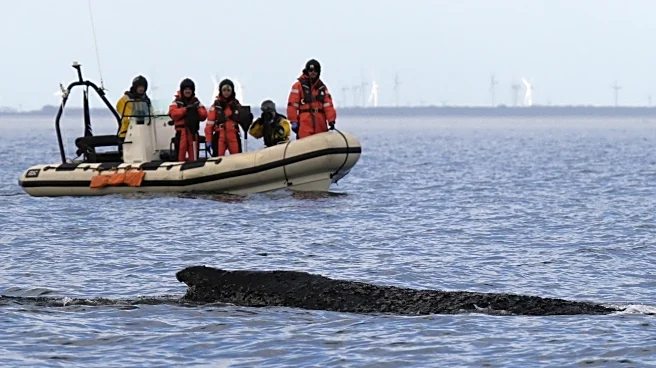
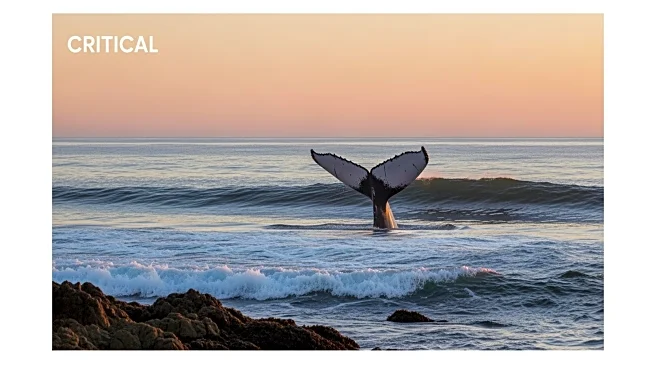
A humpback whale that had been stranded on Germany's Baltic Sea coast has successfully freed itself and swum into deeper waters. The whale, approximately 10 meters long, was first spotted stuck in shallow waters near Niendorf. Rescue teams, using boats
and excavators, worked tirelessly to guide the whale back to the sea. The whale managed to free itself overnight, although it remains in a weakened state. Rescuers, including marine biologist Robert Marc Lehmann, have expressed cautious optimism about the whale's recovery, noting that it still faces challenges, including a skin disease and the risk of becoming stranded again.
Why It's Important?
The successful rescue of the whale underscores the importance of coordinated conservation efforts and the challenges faced by marine life due to human activities. The whale's entanglement in a fishing net highlights the ongoing threat of marine debris and the need for sustainable fishing practices. This incident draws attention to the broader environmental issues affecting marine ecosystems and the critical role of rescue operations in wildlife conservation. The efforts of the rescue teams demonstrate the impact of human intervention in preserving endangered species and maintaining biodiversity.
What's Next?
The whale's journey is not yet over, as it must navigate back to its natural habitat in the Atlantic Ocean. Rescue teams and marine experts will continue to monitor its progress, hoping it can successfully traverse the straits between Germany, Denmark, and Sweden. The situation remains delicate, with the whale's health and ability to avoid further stranding being key concerns. Continued vigilance and support from conservation groups will be essential in ensuring the whale's safe return to the ocean.