





What's Happening?
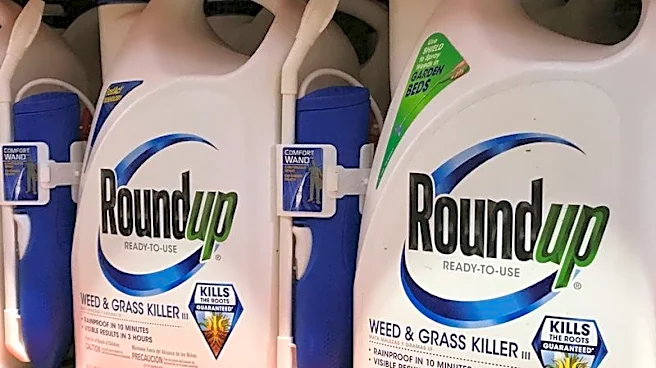
The U.S. Supreme Court is currently hearing arguments in the case of Monsanto v. Durnell, a pivotal legal battle that could determine the extent of liability for pesticide manufacturers regarding health warnings. The Center for Food Safety (CFS), a key
legal nonprofit, is involved in the case, advocating for stronger public health protections against pesticides. The case centers on glyphosate, the active ingredient in Monsanto's Roundup, which has been linked to cancer. The outcome could significantly affect Americans' rights to be informed about pesticide hazards and states' abilities to enforce their own protective measures. This case follows a 2022 federal court ruling that invalidated the EPA's cancer safety determination for glyphosate, citing inconsistencies with scientific standards.
Why It's Important?
The decision in Monsanto v. Durnell holds substantial implications for public health and regulatory practices in the U.S. If the court sides with Monsanto, it could limit states' rights to require health warnings on pesticides, potentially reducing public awareness of associated cancer risks. This could also set a precedent for shielding pesticide manufacturers from liability, impacting thousands of ongoing and future lawsuits related to glyphosate and other chemicals. The case underscores the tension between federal and state regulatory powers and the role of scientific evidence in shaping public policy.
What's Next?
A decision from the Supreme Court is expected by the end of June. Depending on the outcome, there could be significant shifts in how pesticide regulations are enforced across the U.S. A ruling in favor of Monsanto might prompt legislative efforts to strengthen state-level protections or lead to increased advocacy for federal regulatory reforms. Conversely, a decision against Monsanto could bolster state rights and encourage more stringent labeling requirements.
Beyond the Headlines
This case highlights broader issues of environmental justice and the influence of corporate lobbying on public health policies. The widespread use of glyphosate and its presence in the environment raise concerns about long-term ecological impacts and the need for sustainable agricultural practices. The legal battle also reflects ongoing debates about the balance between economic interests and public health priorities.