




What's Happening?
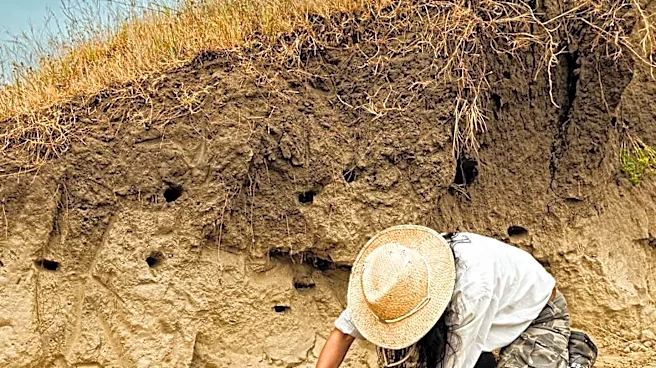
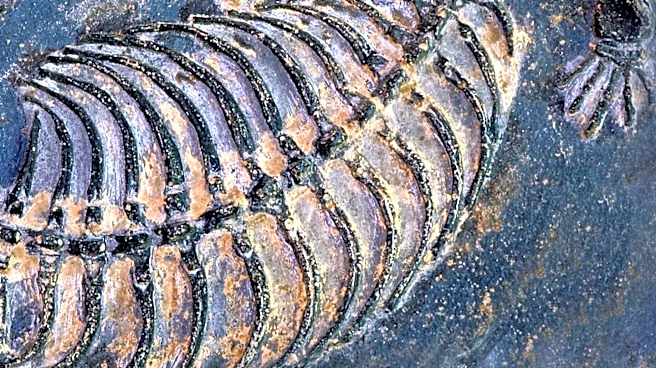
A massive fossilized skeleton of a Mastodonsaurus, weighing 2,865 pounds, is being meticulously uncovered by over 2,000 volunteers at the Copernicus Science Centre in Warsaw, Poland. This public science initiative allows ordinary citizens, including managers,
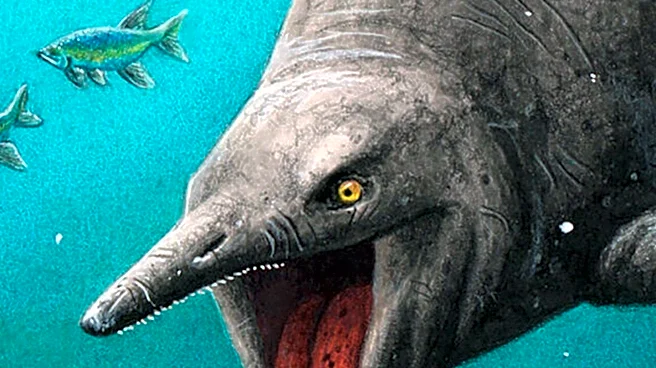
cleaners, and tattoo artists, to participate in the delicate process of chipping away rock to reveal the ancient bones. The Mastodonsaurus, an amphibian from the Middle Triassic period, lived approximately 240 million years ago. The project, led by fossil expert Tomasz Sulej and his colleague Wojciech Pawlak, aims to display the largest Mastodonsaurus skeleton in any museum worldwide. The initiative not only engages the public in scientific discovery but also provides insights into the resilience of life on Earth following mass extinction events.
Why It's Important?
This project highlights the potential for public involvement in scientific research, democratizing access to paleontological discoveries. By engaging volunteers, the initiative fosters a deeper public understanding of Earth's history and the processes of scientific inquiry. The discovery of such a well-preserved and large Mastodonsaurus skeleton offers new scientific insights into the species' biology and evolution. Additionally, the project underscores the resilience of life on Earth, as the Mastodonsaurus thrived after a major extinction event, providing a hopeful perspective on current environmental challenges.
What's Next?
Once the cleaning process is complete, the Mastodonsaurus skeleton will be displayed at the Copernicus Science Centre, expected around October or November. This display will offer educational opportunities for visitors and further public engagement with paleontology. The findings from this project may lead to new research on the Mastodonsaurus and its environment, contributing to the broader understanding of prehistoric life and evolutionary biology.
Beyond the Headlines
The project serves as a reminder of the enduring power of nature and the adaptability of life forms in the face of catastrophic events. It also raises questions about the role of public participation in scientific research and how such initiatives can be expanded to other fields. The involvement of non-scientists in this project could inspire similar efforts in other areas of science, promoting a culture of curiosity and lifelong learning.