


What's Happening?
Governor Kathy Hochul has discussed her pivotal role in securing the Buffalo Bills' long-term presence in Western New York, culminating in the construction of the new Highmark Stadium. Upon taking office in August 2021, Governor Hochul prioritized negotiations
with Terry and Kim Pegula, owners of the Bills, after a period of minimal communication under the previous administration. She initiated late-night calls and discussions through holidays to finalize an agreement that included a 30-year commitment from the team and ensured New York State would not be responsible for cost overruns, a crucial point as the stadium's initial $1.4 billion price tag escalated to nearly $2.2 billion. Governor Hochul emphasized the team's significance to the region's identity, likening the Bills to Buffalo as Broadway is to New York City, and successfully navigated legislative challenges to secure the deal.
Why It's Important?
The successful negotiation to keep the Buffalo Bills in Western New York is significant for the region's economy and cultural identity. The new Highmark Stadium is expected to generate income and contribute to the local economy, with the state's share of the funding potentially being recouped through income tax derived from the team's continued presence. The agreement also prevents the potential relocation of the team, which would have had a devastating impact on local pride and economic activity. Governor Hochul's personal involvement and commitment, stemming from her roots in Hamburg, New York, underscore the deep connection between professional sports teams and their communities, particularly in smaller markets where teams often serve as a central point of civic identity. The deal also highlights the complexities of public-private partnerships in funding large-scale sports infrastructure.
What's Next?
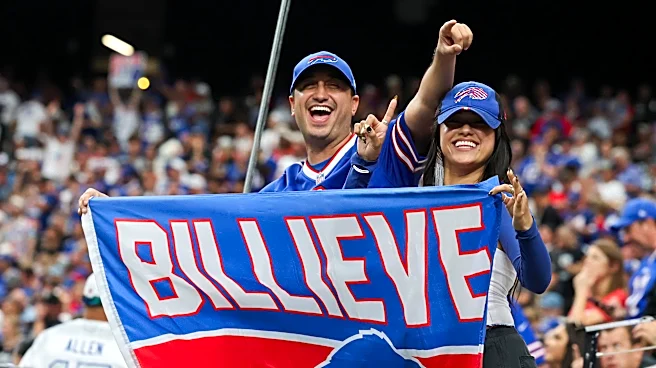
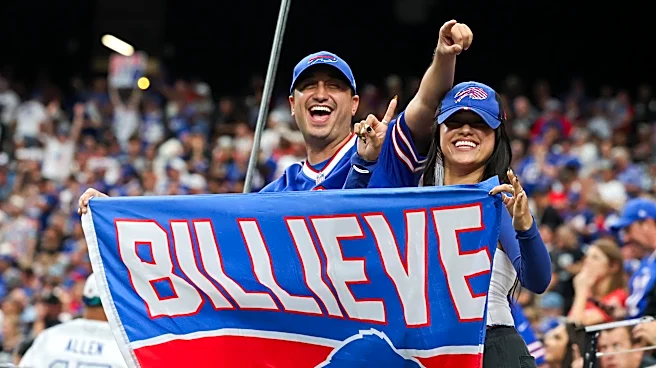
With the new Highmark Stadium now open and the Bills committed to Western New York for the next three decades, the focus will shift to maximizing the economic and community benefits of the facility. The stadium is designed to offer a strong home-field advantage, embracing the local weather elements, which is expected to enhance the fan experience. The success of this public-private partnership could serve as a model or cautionary tale for other cities and states considering similar investments in sports infrastructure. Continued monitoring of the stadium's economic impact and the state's return on investment will be crucial in evaluating the long-term success of the deal. The community will also continue to rally around the team, reinforcing the cultural significance of the Bills to Buffalo.
Beyond the Headlines
The narrative surrounding the Buffalo Bills' stadium deal delves into the broader implications of sports as a cultural and political force. Governor Hochul's determination to keep the team in Buffalo, despite political opposition and the financial scale of the project, reflects the understanding that professional sports franchises are often seen as integral to a city's soul and global image. The discussion about the cost to taxpayers, while significant, is often balanced against the intangible benefits of community cohesion, regional pride, and the economic ripple effects of a major sports team. This case illustrates the ongoing tension between fiscal responsibility and the emotional and cultural value placed on sports teams, often leading to complex political decisions that weigh economic data against public sentiment.