






What's Happening?
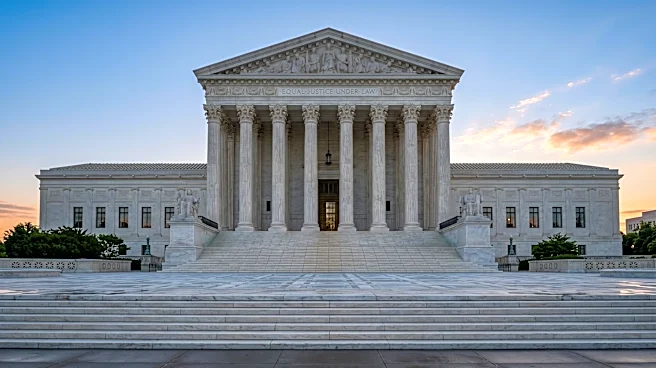
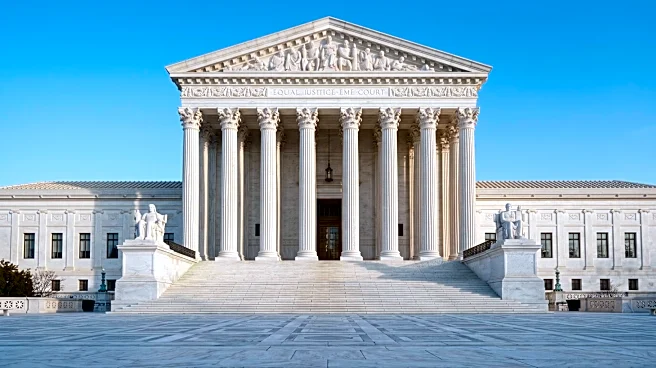
Oral arguments at the United States Supreme Court have been consistently extending beyond their traditional 60-minute duration, often stretching to 90 minutes or longer. This trend, which became more pronounced during the COVID-19 pandemic, is testing
the patience of some justices, including Chief Justice John Roberts. The pandemic necessitated changes to the argument format, introducing uninterrupted introductory statements for advocates and individual questioning time for each justice before a more open discussion. While some changes, like Justice Clarence Thomas's increased participation, have been welcomed, the extended duration and increased speaking by some justices, particularly Justice Ketanji Brown Jackson and Justice Sonia Sotomayor, are noted. According to Tonja Jacobi, a law professor at Emory University, liberal justices tend to speak more when they anticipate being on the losing side of an argument, attempting to persuade their colleagues.
Why It's Important?
The extended length of Supreme Court oral arguments carries significant implications for the court's efficiency, public perception, and the deliberative process. Longer arguments can strain the court's schedule, potentially reducing the number of cases heard or increasing the workload for justices and their staff. From a public perspective, oral arguments are the most transparent part of the Supreme Court's decision-making, and their increasing length, without necessarily adding substantive value, could make them less accessible or engaging for the public. Furthermore, the observation that justices on the anticipated losing side speak more highlights the court's current polarization, suggesting that oral arguments may be less about persuasion and more about articulating dissenting viewpoints or solidifying positions. This dynamic could impact the collegiality among justices and the perceived unity of the court, which is already facing declining public opinion.
What's Next?
Chief Justice John Roberts has indicated he is considering ways to rein in the length of oral arguments, with potential changes to be implemented as early as the new term beginning in October. The challenge lies in finding a solution that manages time effectively without alienating any of the justices or compromising the thoroughness of legal discourse. Any adjustments to the format will be closely watched by legal scholars, advocates, and the public, as they could signal shifts in the court's internal dynamics and its approach to hearing cases. The court will need to balance the need for efficient proceedings with the importance of allowing all justices and advocates sufficient opportunity to present and discuss complex legal issues. The outcome of these considerations could influence how future landmark cases are debated and decided.
Beyond the Headlines
The phenomenon of supersized oral arguments reflects deeper tensions within the Supreme Court and the broader U.S. political landscape. The increased speaking time, particularly by justices in the minority, can be seen as a symptom of a highly polarized court where consensus is often elusive. This dynamic suggests that the traditional role of oral arguments as a forum for genuine intellectual exchange and persuasion might be diminishing, replaced by a platform for justices to articulate their positions for the record or for public consumption. This shift could subtly alter the nature of judicial deliberation, potentially leading to more entrenched ideological divides rather than collaborative legal reasoning. Moreover, the Chief Justice's efforts to manage these extended arguments underscore the delicate balance required to maintain institutional harmony and public confidence in a court that is increasingly under scrutiny.