







What's Happening?
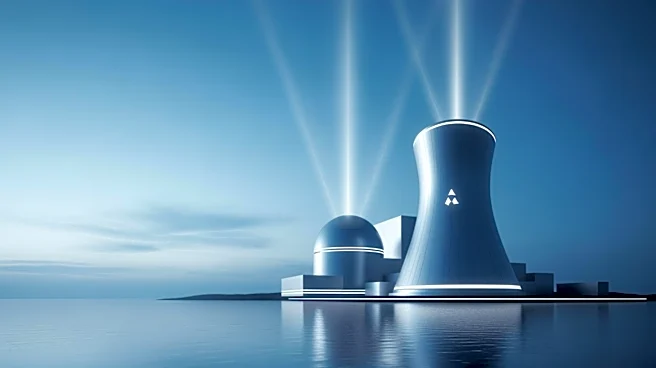
Sweden is making significant strides in nuclear energy expansion with recent applications from Blykalla and Studsvik for up to 1.7 GW of new nuclear capacity. These applications are part of Sweden's broader strategy to enhance its nuclear infrastructure.
The Swedish government has also proposed a substantial financial commitment to the Ringhals SMR project, including a potential $3.7 billion capital injection. This move is part of a larger effort to stabilize the grid, reduce electricity price volatility, and meet decarbonization goals. The government aims to support up to 5,000 MW of new nuclear capacity, with a focus on small modular reactors (SMRs) to provide firm, fossil-free energy.
Why It's Important?
Sweden's nuclear expansion is pivotal in addressing the country's energy challenges, including grid instability and the need for reliable, low-carbon power sources. By investing in nuclear energy, Sweden aims to enhance its energy security and reduce dependence on fossil fuels, aligning with its net-zero emissions target by 2045. The government's financial backing and regulatory support for new nuclear projects signal a significant policy shift, potentially influencing other countries' energy strategies. This development could also stimulate economic growth by creating jobs and fostering innovation in nuclear technology.
What's Next?
The next steps involve detailed planning and permitting processes for the proposed nuclear projects. Blykalla and Studsvik will continue to refine their reactor designs and secure necessary approvals. The Swedish government will work on finalizing its financial commitments and regulatory frameworks to facilitate these projects. Stakeholders, including local communities and environmental groups, are expected to engage in discussions about the implications of expanding nuclear capacity. The success of these initiatives could set a precedent for future nuclear developments in Sweden and beyond.