



What's Happening?
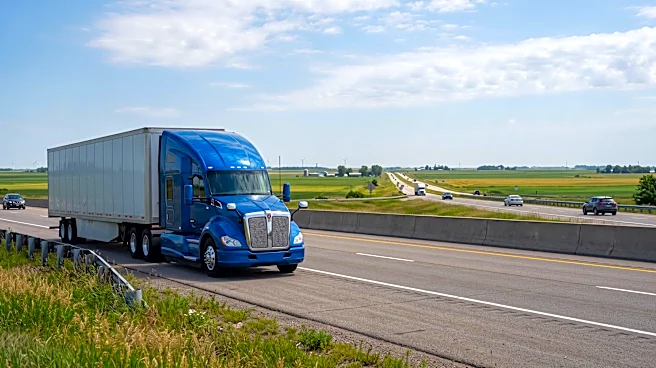
The Indiana State Police's Commercial Vehicle Enforcement Division recently released statistics on its efforts to enhance road safety. In the past month, the division inspected 4,800 semi-trucks across Indiana. These inspections led to significant enforcement
actions, with over 600 trucks being taken out of service due to various issues. Additionally, the police issued more than 9,000 violations during this period. This initiative is part of Governor Mike Braun’s broader public safety platform, which aims to ensure safe environments for residents and those traveling through Indiana, often referred to as the 'Crossroads of America.' The focus on commercial vehicles underscores a commitment to maintaining safety standards on the state's roadways.
Why It's Important?
The high number of violations and out-of-service trucks highlights persistent safety concerns within the commercial trucking industry in Indiana. This level of enforcement is crucial for public safety, as semi-trucks, due to their size and weight, can cause severe accidents if not properly maintained or operated. The initiative helps to mitigate risks associated with mechanical failures, driver fatigue, or non-compliance with regulations, thereby protecting all motorists on Indiana's roads. For the trucking industry, these inspections emphasize the importance of adherence to safety protocols and vehicle maintenance, potentially leading to increased operational costs for companies that fail to comply. Ultimately, this effort aims to foster a safer transportation network, which is vital for both the state's economy and the well-being of its citizens.
What's Next?
The Indiana State Police are expected to continue their rigorous inspection programs as part of Governor Braun's public safety agenda. This ongoing enforcement will likely lead to further identification and rectification of safety issues within the commercial trucking sector. Trucking companies operating in Indiana will need to maintain strict compliance with state and federal regulations to avoid penalties and operational disruptions. The sustained focus on commercial vehicle safety could also prompt discussions about potential legislative changes or increased funding for enforcement divisions to support these efforts. Furthermore, the data collected from these inspections may inform future public awareness campaigns aimed at improving road safety for all users.
Beyond the Headlines
Beyond the immediate safety implications, these inspection results shed light on the broader challenges of regulating a critical economic sector like commercial trucking. The significant number of violations suggests that some operators may be cutting corners on maintenance or operational standards, potentially driven by economic pressures or tight delivery schedules. This raises questions about the balance between economic efficiency and public safety, and whether current regulatory frameworks are sufficient or adequately enforced. The state's proactive stance could set a precedent for other regions, encouraging a more stringent approach to commercial vehicle safety nationwide. It also underscores the role of state agencies in safeguarding infrastructure and public welfare against the backdrop of a busy commercial corridor.