



What's Happening?
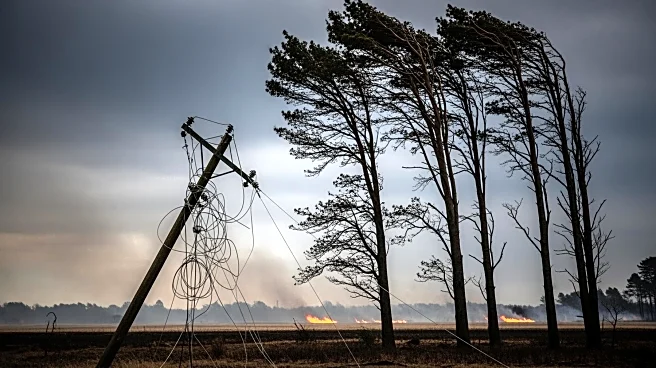
High winds have caused significant disruptions across the Rust Belt and Nebraska, leading to power outages and fueling wildfires. In the Rust Belt, particularly in Ohio, Pennsylvania, and Michigan, nearly 450,000 customers were left without power due
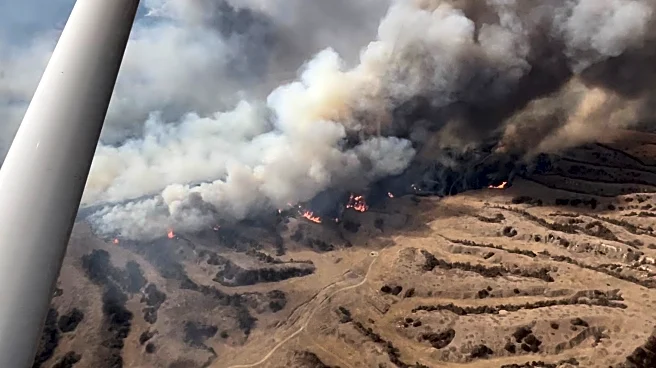
to the strong winds. The National Weather Service reported a 66-mph gust at Pittsburgh International Airport, marking it as the fourth-strongest non-thunderstorm wind on record. In Nebraska, the winds have exacerbated wildfires, resulting in at least one fatality in Arthur County. The Nebraska Emergency Management Agency reported that the Morrill County fire has burned over 735 square miles, destroying at least 12 structures. The fires have been difficult to contain due to winds reaching up to 65 mph.
Why It's Important?
The high winds and resulting power outages and wildfires highlight the vulnerability of infrastructure and communities to extreme weather events. The power outages affect hundreds of thousands of residents, disrupting daily life and potentially impacting local economies. In Nebraska, the wildfires pose a significant threat to agriculture and rural communities, with potential long-term economic and environmental impacts. The situation underscores the need for improved disaster preparedness and response strategies to mitigate the effects of such natural disasters.
What's Next?
Efforts to restore power in the Rust Belt are ongoing, with utility companies working to repair damaged infrastructure. In Nebraska, firefighting efforts continue, with local farmers and volunteers providing support. The Nebraska Emergency Management Agency is coordinating the response, and Governor Jim Pillen has toured the affected areas. As weather conditions remain volatile, with forecasts of further extreme weather, authorities are on high alert for additional challenges.