





What's Happening?
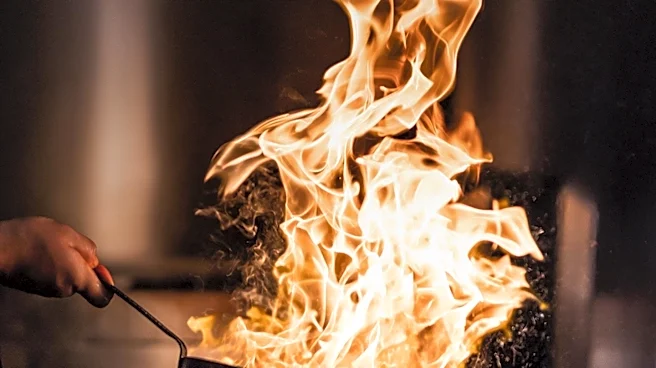
The Chicago Fire Department is investigating a suspected arson that occurred early Sunday morning at Habibti, a West Loop restaurant and bar located at 116 N. Aberdeen St. Police and firefighters responded to two separate fires at the property around
5:43 a.m. The incident has been classified as arson by the police, though no injuries were reported. Security footage shows a silver SUV arriving in the alley, with two individuals exiting and breaking into the restaurant's glass garage-door entrance. After approximately four minutes inside, flames became visible, and the individuals fled in the SUV. The vehicle briefly returned before leaving the scene. This arson is the latest in a series of incidents involving Habibti, which has faced scrutiny from neighbors and Ald. Walter Redmond Burnett (27th) for allegedly operating as an unlicensed nightclub rather than a restaurant. Residents have reported months of late-night disturbances, including loud music, public drinking, and fights, leading to community meetings organized by Ald. Burnett and the Department of Business Affairs and Consumer Protection. The restaurant is also facing a licensing disciplinary case for alleged violations of its plan of operation, including selling tobacco without a license and non-compliance with police directives. A hearing for this case, previously delayed, is now scheduled for September 10.
Why It's Important?
The suspected arson at Habibti in the West Loop is a significant development that escalates ongoing tensions between a business, its community, and city regulators. This incident highlights the severe consequences that can arise from prolonged disputes over business operations and neighborhood quality of life. The classification of the fire as arson suggests a criminal act, potentially linked to the restaurant's embattled status, which could lead to further legal and investigative actions. For the community, this event intensifies concerns about safety and order, particularly given the history of late-night disturbances reported by residents. The involvement of Ald. Walter Redmond Burnett and the Department of Business Affairs and Consumer Protection underscores the city's efforts to address nuisance complaints and enforce licensing regulations. The disciplinary case against Habibti, alleging violations of its operational plan, points to broader issues of business accountability and compliance with local ordinances. This situation could set a precedent for how the city handles businesses that repeatedly draw community complaints and allegedly operate outside their approved parameters, potentially influencing future licensing decisions and enforcement strategies in Chicago's dynamic commercial districts.
What's Next?
The Chicago Fire Department's Office of Fire Investigation will continue its investigation into the suspected arson at Habibti to determine the exact cause and identify those responsible. Concurrently, the Chicago Police Department will pursue the criminal investigation into the arson. The restaurant owner, Fadi Akileh, has not yet responded to requests for comment regarding the incident. Separately, Habibti is scheduled for a licensing disciplinary hearing on September 10. This hearing, which was previously delayed, will address allegations of the business violating its plan of operation, including selling tobacco without a license and failing to comply with police directives. The outcome of this hearing could significantly impact Habibti's future, potentially leading to sanctions or even the revocation of its business license. The ongoing community meetings, organized by Ald. Walter Redmond Burnett and the Department of Business Affairs and Consumer Protection, will likely continue to monitor the situation and address resident concerns. The city's response to both the arson and the licensing violations will be crucial in demonstrating its commitment to public safety and regulatory enforcement in the West Loop.
Beyond the Headlines
The suspected arson at Habibti, coupled with its history of community disputes and licensing issues, reveals deeper societal and economic undercurrents in urban environments. This incident underscores the complex challenges faced by rapidly developing neighborhoods like the West Loop, where residential and commercial interests often clash. The restaurant owner's claims of racism from complaining neighbors, disputed by Ald. Burnett, highlight the sensitive intersection of business practices, community demographics, and perceived discrimination. This narrative adds a layer of social complexity to what might otherwise appear as a straightforward regulatory issue. The use of social media by residents to document disturbances, and the city's subsequent engagement through community meetings, illustrate the evolving dynamics of civic participation and accountability in the digital age. Furthermore, the incident raises questions about the effectiveness of current regulatory frameworks in preventing businesses from operating outside their intended scope and the mechanisms available to communities to address persistent nuisances. The resolution of this case could influence future policy discussions on urban planning, business licensing, and community-police relations in diverse and growing city districts.