


What's Happening?
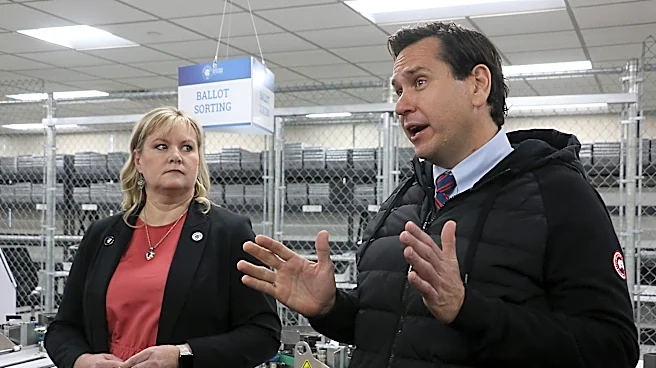
The New Hampshire Senate race, a pivotal contest that could determine control of Congress, has seen an influx of approximately $50 million from outside spending groups. This significant financial intervention is primarily directed towards the race between
Democratic Congressman Chris Pappas and former Republican Senator John E. Sununu. Both candidates are experiencing a deluge of negative advertisements and direct mail, with groups like the pro-Trump No Going Back PAC reserving substantial advertising funds and distributing flyers attacking Pappas. The spending highlights a broader issue within the U.S. campaign finance system, where external organizations exert considerable influence through financial contributions and targeted messaging. Despite efforts by candidates like Pappas to introduce legislation for greater disclosure of outside campaign spending, such bills have faced opposition and failed to gain traction in Congress.
Why It's Important?
The massive influx of outside money into the New Hampshire Senate race underscores a critical aspect of U.S. politics: the growing influence of external groups on electoral outcomes. This trend can significantly impact the democratic process by potentially overshadowing candidates' direct messages and focusing on negative campaigning. For voters, the sheer volume of often-negative and simplistic advertisements can lead to disengagement and a perception that political discourse lacks substance, as noted by New Hampshire residents. The ability of well-funded outside groups to shape narratives and attack candidates without direct accountability to the electorate raises questions about fairness and transparency in elections. This dynamic can also make it harder for candidates with less access to large donors or external support to compete effectively, potentially limiting the diversity of voices in government.
What's Next?
As the New Hampshire Senate race continues to be highly competitive, the flow of outside money is expected to persist, leading to more advertisements and mailers. Candidates will likely continue their efforts to break through the noise created by these external campaigns, attempting to convey their core messages directly to voters. The ongoing debate over campaign finance reform, particularly regarding disclosure requirements for outside spending, is also likely to remain a prominent issue. While legislation aimed at increasing transparency has faced hurdles, the continued impact of large-scale external spending could reignite calls for reform from various stakeholders, including civil society groups and some political leaders. The outcome of this race, and others like it, will serve as a case study for the effectiveness and implications of such significant outside financial influence in U.S. elections.
Beyond the Headlines
The extensive spending by outside groups in the New Hampshire Senate race points to deeper ethical and structural challenges within the U.S. political system. The focus on short, attention-grabbing, and often negative messages, as described by a Republican state representative, suggests a shift in political communication towards a 'slop economy' of marketing. This approach prioritizes capturing fleeting attention over fostering informed public discourse. The lack of transparency in the sources and motivations behind some of this spending can erode public trust in the electoral process and create an uneven playing field. Furthermore, the reliance on external funding can lead to a perception that elected officials are beholden to special interests rather than their constituents. Addressing these issues would require a comprehensive re-evaluation of campaign finance laws, potentially including stricter regulations on disclosure, limits on independent expenditures, and mechanisms to ensure that political advertising promotes substantive debate rather than mere soundbites.