






What's Happening?
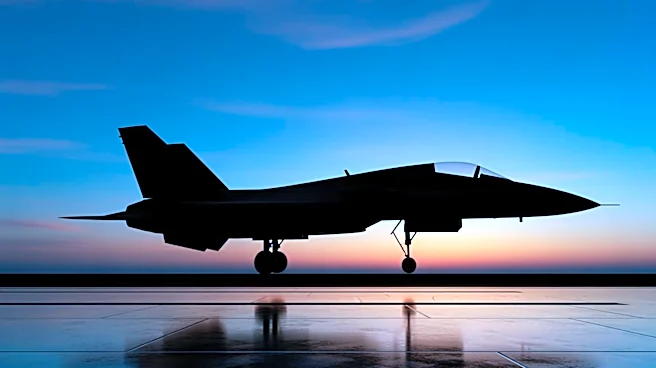
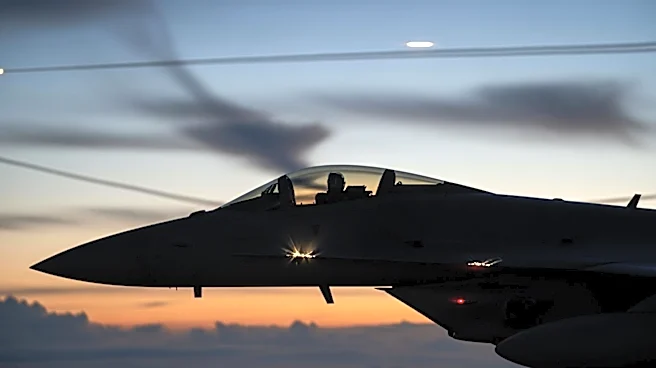
The F-15 Strike Eagle, a renowned air superiority jet with an impressive combat record, encountered significant challenges during the 2026 Iran War. On March 2, three F-15E Strike Eagles were lost in a friendly fire incident over Kuwait, reportedly shot
down by a Kuwaiti F/A-18 Hornet. Additionally, on April 3, the Iranian military successfully downed an F-15E from the 494th Fighter Squadron over southwestern Iran. These incidents have raised questions about the aircraft's invincibility, especially considering past exercises where Indian MiG-21 Bisons outperformed U.S. F-15s in simulated combat. The Cope India 2004 exercise highlighted the effectiveness of the MiG-21s, which managed to defeat the F-15s in 90% of engagements, prompting the U.S. Air Force to consider acquiring more advanced F-22 Raptors.
Why It's Important?
The setbacks faced by the F-15 Strike Eagles during the Iran War and past exercises underscore potential vulnerabilities in U.S. air superiority capabilities. This has implications for U.S. military strategy and defense procurement, as reliance on older aircraft may not suffice against evolving threats. The incidents could influence future investments in more advanced fighter jets like the F-22 Raptor, ensuring the U.S. maintains its edge in aerial combat. Additionally, these developments may impact international perceptions of U.S. military strength, potentially affecting geopolitical dynamics and defense alliances.
What's Next?
In response to these challenges, the U.S. Air Force may accelerate efforts to modernize its fleet, focusing on acquiring more advanced aircraft to replace aging models like the F-15. This could involve increased funding for the development and procurement of next-generation fighters. Furthermore, the incidents may prompt a review of current training and engagement strategies to address identified weaknesses. Internationally, allies and adversaries alike will be closely monitoring these developments, potentially adjusting their own military strategies in response.
Beyond the Headlines
The performance of the F-15s against the MiG-21s highlights the importance of technological upgrades and strategic adaptability in modern warfare. The success of the MiG-21s, despite being older models, demonstrates that with the right enhancements, even legacy aircraft can pose significant threats. This raises questions about the balance between investing in new technology versus upgrading existing platforms. Additionally, the incidents may spark discussions on the ethical and strategic implications of friendly fire incidents, emphasizing the need for improved communication and coordination in joint operations.