






What's Happening?
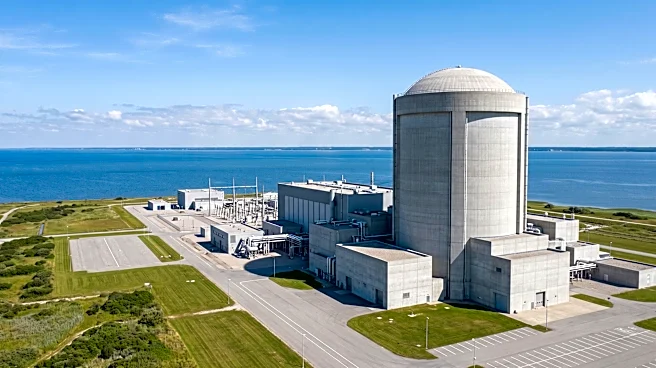
The planned restart of the Palisades Nuclear Power Plant in Michigan has been paused due to a fuel assembly issue. Holtec, the operator, reported that a fuel assembly tilted during the installation of radioactive fuel into the reactor vessel in late August.
This incident has temporarily halted the fueling process as engineers work to safely retrieve the tilted assembly. Holtec officials have stated that there was no radiation leak and no danger to workers or the public. However, anti-nuclear activists, such as Kevin Kamps, Executive Director of Don't Waste Michigan, have voiced concerns, highlighting the criticality of the reactor core and nuclear fuel as the most dangerous part of a nuclear power plant. Nick Culp, Sr. Manager, Government Affairs and Communications for Holtec Palisades, affirmed that the nuclear industry operates under rigorous standards and independent federal oversight, with safety as the highest priority. A Covert Township official also expressed support for the repowering of Palisades, provided it is done safely.
Why It's Important?
The incident at the Palisades Nuclear Power Plant underscores the inherent safety challenges and public scrutiny surrounding nuclear energy, even in the context of restarting a previously decommissioned facility. The plant was set to be the first 'decommissioned' nuclear reactor in the nation to be restarted, a move that could have significant implications for energy policy and the future of nuclear power in the U.S. The pause, despite no reported radiation leak, fuels the arguments of anti-nuclear activists who emphasize the potential for critical safety incidents. For the nuclear industry, this event highlights the need for meticulous adherence to safety protocols and transparent communication to maintain public trust. The successful and safe restart of such a plant could serve as a model for extending the life of other nuclear facilities, contributing to a stable, carbon-free energy supply. Conversely, any perceived missteps could further entrench opposition and complicate future nuclear development projects, impacting energy security and climate goals.
What's Next?
Engineers are currently working to safely retrieve the tilted fuel assembly at the Palisades Nuclear Power Plant. The fueling process will remain on hold until this issue is resolved and appropriate verification is completed. Holtec is expected to continue following established protocols and safety measures, with ongoing oversight from independent federal agencies. The incident will likely lead to further scrutiny from anti-nuclear groups and potentially from regulatory bodies, which could influence the timeline for the plant's eventual restart. The outcome of this retrieval operation and the subsequent restart process will be closely watched by both proponents and opponents of nuclear energy, as it could set a precedent for future efforts to reactivate or extend the operational lives of other nuclear facilities across the U.S. The plant's ability to resume operations safely and efficiently will be crucial for its long-term viability and for broader discussions about nuclear power's role in the national energy mix.
Beyond the Headlines
This incident at Palisades touches upon the broader debate regarding the 'nuclear renaissance' in the U.S. and the challenges of integrating existing and new nuclear technologies into the energy grid. While nuclear power offers a significant source of carbon-free electricity, concerns about safety, waste management, and the economic viability of large-scale projects persist. The restart of Palisades represents an attempt to leverage existing infrastructure to meet growing energy demands, potentially driven by power-hungry technologies like artificial intelligence. However, the current setback highlights that even with advanced safety measures, the public and environmental risks associated with nuclear fuel handling remain a critical point of contention. The incident could influence public perception and policy decisions regarding the expansion of nuclear energy, emphasizing the need for robust regulatory frameworks, continuous technological improvements, and effective public engagement to build confidence in nuclear power as a sustainable energy solution.