


What's Happening?
Federal immigration agents have been deployed to major airports across the United States as part of the Trump administration's response to ongoing disruptions in air travel during a partial government shutdown of the Department of Homeland Security (DHS).
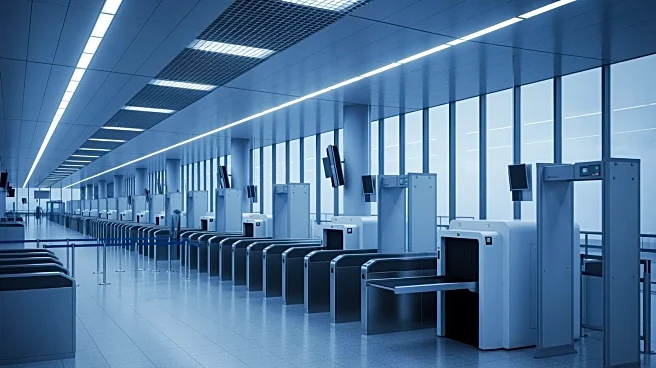
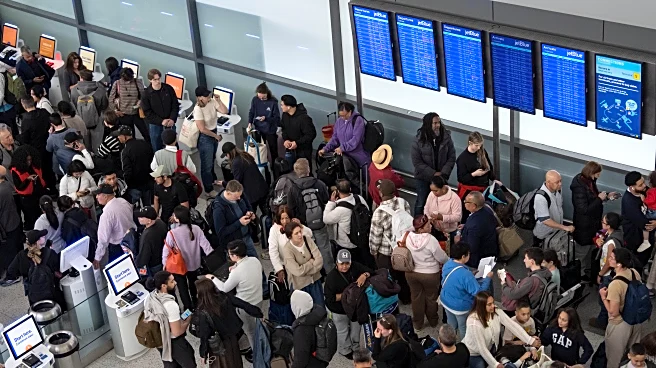
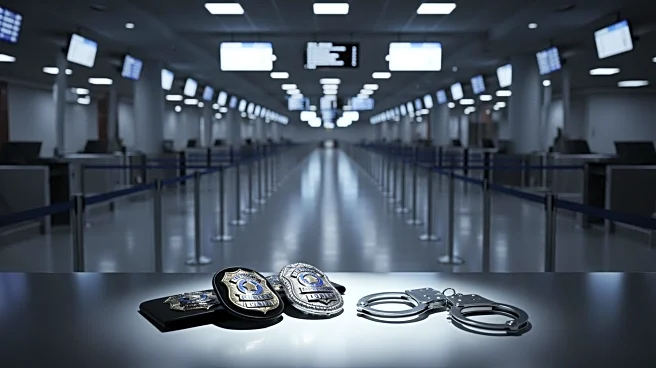
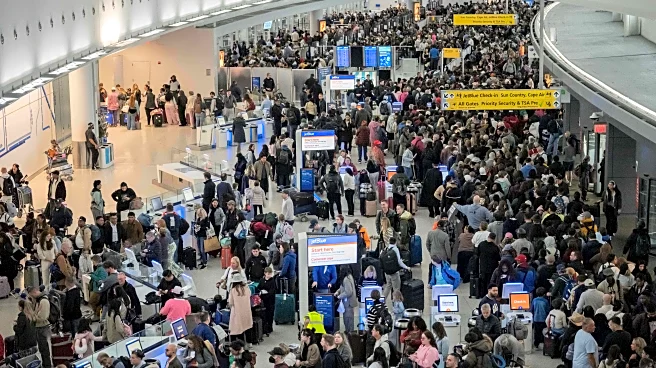
U.S. Immigration and Customs Enforcement (ICE) agents are assisting Transportation Security Administration (TSA) agents to alleviate long wait times at airports. The deployment includes airports such as Hartsfield-Jackson Atlanta International Airport, Chicago O'Hare International Airport, and John F. Kennedy International Airport, among others. The move comes amid a prolonged funding impasse affecting the DHS, leading to staffing shortages and longer security lines. ICE agents are performing non-screening support duties to allow TSA officers to focus on passenger and baggage screening. The deployment has sparked concerns from local officials about potential harassment of travelers.
Why It's Important?
The deployment of ICE agents to airports highlights the significant impact of the DHS funding impasse on national security and air travel efficiency. With TSA employees working without pay, the presence of ICE agents aims to mitigate the effects of staffing shortages. However, this move raises concerns about the potential for increased scrutiny and harassment of travelers, particularly those with uncertain immigration status. The situation underscores the broader political and operational challenges faced by federal agencies during government shutdowns, affecting both security operations and public perception. The deployment also reflects the administration's approach to utilizing available resources to address immediate operational needs, despite the ongoing political stalemate.
What's Next?
The ongoing funding impasse in Congress remains unresolved, with lawmakers divided over DHS funding and ICE regulations. The situation may lead to further political negotiations and potential legislative actions to address the shutdown's impact on federal operations. Meanwhile, airports and local authorities will continue to monitor the deployment's effects on security and traveler experiences. The outcome of these developments could influence future policy decisions regarding federal agency operations during government shutdowns.