


What's Happening?
The National Weather Service has forecasted a significant change in weather patterns for Southern California, particularly Los Angeles, as a series of storms are expected to bring cooler temperatures and rain. The region has been experiencing unseasonably
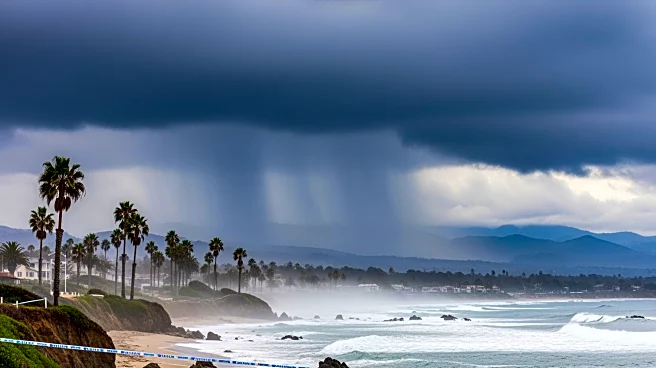
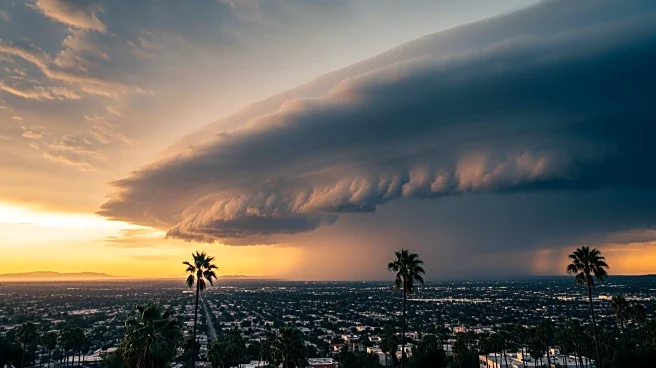
warm and dry conditions, with temperatures reaching up to 80 degrees in downtown Los Angeles. This warm spell, driven by offshore flows and Santa Ana winds, is typical for the winter season in Southern California. However, starting Tuesday, a shift in wind direction will bring cooler air from the ocean, leading to a drop in temperatures to the 60s. The first storm is expected to arrive late Tuesday night, bringing light to moderate rain and strong winds, especially in mountainous areas. The National Weather Service has also issued a high surf advisory for Ventura County beaches due to large waves and dangerous rip currents.
Why It's Important?
The shift in weather patterns is significant for Southern California, a region that often faces challenges related to water scarcity and wildfire risks. The incoming rain could provide much-needed relief to dry conditions, potentially reducing the risk of wildfires. However, the storms also pose challenges, such as increased traffic and minor flooding on roads, which could disrupt daily activities. The high surf advisory highlights the potential dangers for beachgoers and surfers, emphasizing the need for caution. The weather change also underscores the region's vulnerability to sharp climatic swings, which can impact agriculture, water management, and public safety.
What's Next?
Following the initial storm, forecasters predict a break in the weather until Saturday, when another large-scale, slow-moving low-pressure system is expected to bring more rain. This pattern of storms is likely to continue into the following week, although the intensity and rainfall amounts are yet to be determined. Residents and local authorities will need to prepare for potential disruptions and monitor weather updates closely. The ongoing weather changes may prompt discussions on infrastructure resilience and emergency preparedness in the face of climate variability.