



What's Happening?
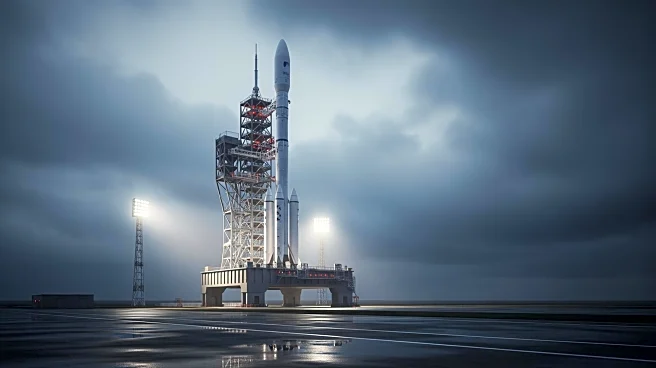
NASA is finalizing preparations for the Artemis II mission, set to launch no earlier than April 1, from Kennedy Space Center in Florida. The mission will send astronauts Reid Wiseman, Victor Glover, Christina Koch, and Jeremy Hansen on a journey around
the Moon. The launch teams are conducting final checks on the Space Launch System (SLS) rocket and Orion spacecraft, including engine diagnostics and battery charging. Weather forecasts indicate an 80% chance of favorable conditions, but concerns remain about cumulus clouds, ground winds, and solar weather. Engineers are also ensuring the astronauts' pressure suits are ready for any potential cabin depressurization. The mission marks NASA's first crewed mission under the Artemis program, aiming to pave the way for future lunar exploration.
Why It's Important?
The Artemis II mission is a pivotal moment in NASA's efforts to return humans to the Moon and establish a sustainable presence. Successful execution of this mission will demonstrate the capabilities of the SLS rocket and Orion spacecraft, crucial for future lunar and deep space missions. The mission's outcome will influence NASA's timeline and strategy for subsequent Artemis missions, including the eventual goal of landing astronauts on the lunar surface. The mission also represents international collaboration, with Canadian astronaut Jeremy Hansen participating, highlighting the global interest in lunar exploration.
What's Next?
As the launch date approaches, NASA will continue to monitor weather conditions and solar activity to ensure a safe launch. The agency will conduct a final review of all systems and procedures, with live coverage of the launch available on various platforms. If successful, Artemis II will set the stage for Artemis III, which aims to land astronauts on the Moon. The mission's progress will be closely watched by the global space community, as it represents a significant step toward human exploration beyond Earth.