
What's Happening?
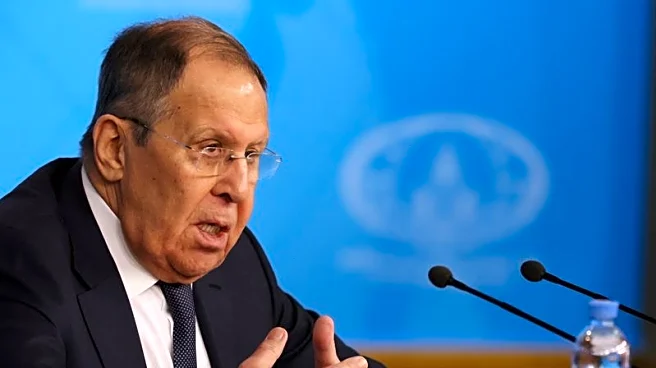
Russian Foreign Minister Sergei Lavrov announced that Russia will continue to adhere to the numerical limits of the expired New START nuclear weapons treaty, contingent upon the United States doing the same. This statement was made to the State Duma shortly
after the treaty's expiration on February 5, 2026. The New START treaty, originally signed in 2010 and extended in 2021 by Presidents Joe Biden and Vladimir Putin, capped deployed strategic warheads at 1,550 for each country. Despite the treaty's expiration, Lavrov emphasized that Russia's moratorium on exceeding these limits remains active, provided the U.S. does not surpass them. The treaty's expiration marks the first time in over fifty years that the world's two largest nuclear arsenals are without binding restrictions. President Donald Trump had previously rejected a proposal for a one-year extension of the treaty, seeking a modernized agreement that would include China, which has consistently refused to join such talks.
Why It's Important?
The expiration of the New START treaty and Russia's conditional commitment to its limits highlight significant challenges in global nuclear arms control. Without the treaty, there are no binding restrictions or verification mechanisms, increasing reliance on intelligence assessments for compliance. This situation raises concerns about nuclear stability, especially amid heightened geopolitical tensions over Ukraine and broader strategic competition. The absence of inspections and data exchanges, which previously provided transparency, could lead to increased mistrust and potential arms races. The call for a multilateral agreement involving other nuclear powers like China, the U.K., and France adds complexity to future negotiations, as these countries have different strategic interests and arsenals.
What's Next?
The future of nuclear arms control remains uncertain as both Russia and the U.S. navigate the post-New START landscape. Potential next steps could involve diplomatic efforts to negotiate a new treaty or framework that addresses the concerns of all involved parties, including the inclusion of other nuclear powers. However, achieving such an agreement may be complicated by differing national interests and the current geopolitical climate. The international community will likely monitor the situation closely, as any developments could have significant implications for global security and arms control efforts.