







What's Happening?
The Kansas Board of Regents has made the development of a framework for the responsible use of artificial intelligence (AI) its top priority in the annual examination of its strategic plan for higher education. This initiative will focus on AI's application
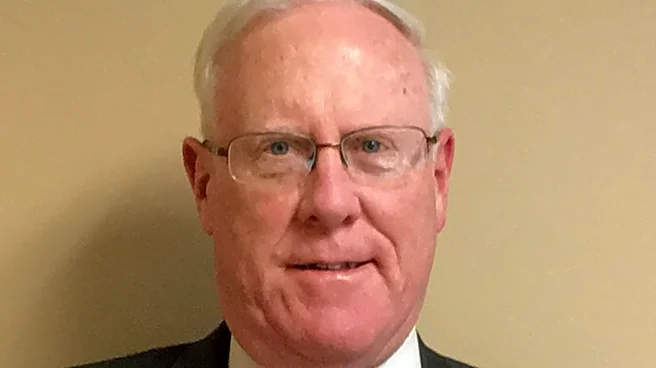
in student teaching, academic research, and administrative oversight. Regent Neelima Parasker, president and CEO of SnapIT Solutions, will chair the committee tasked with exploring AI and drafting guardrail recommendations. The committee's work will involve examining AI activities across universities, identifying statewide AI priorities relevant to higher education, and understanding AI's role in workforce development. The Board acknowledged that different universities in Kansas utilize large language models differently and aims to advance a unified policy. Concurrently, the Board of Regents approved a budget proposal for the state’s public higher education system, which will be presented to Governor Laura Kelly and the 2027 Kansas Legislature. This budget outline seeks to prevent further cuts in state funding and ensure support for Extension and Agriculture Research Programs at Kansas State University.
Why It's Important?
This focus on AI policy by the Kansas Board of Regents is crucial for shaping the future of higher education and workforce development in the state. By proactively establishing guidelines for AI use, Kansas universities can harness the technology's benefits while mitigating potential risks related to academic integrity, data privacy, and ethical concerns. This initiative could position Kansas as a leader in responsible AI integration within academia, potentially attracting talent and investment in AI-related fields. The budget proposal is equally significant, as it aims to stabilize funding for public higher education, which is vital for maintaining educational quality and accessibility. Continued state support for programs like those at Kansas State University's Extension and Agriculture Research is essential for the state's agricultural sector, a key economic driver. The investments outlined in the budget are intended to ensure students have access to quality educational opportunities and to support the growth of the Kansas economy by addressing rising costs in the higher education system.
What's Next?
The committee chaired by Regent Neelima Parasker will proceed with its exploratory dive into AI, focusing on developing principles for responsible use, identifying effective practices for student learning, and promoting AI literacy for workforce readiness. They will also address critical issues such as data privacy, cybersecurity, academic integrity, and other ethical considerations. The recommendations from this committee will then be reviewed by the full Board of Regents. Simultaneously, the approved budget proposal for the public higher education system will be presented to Governor Laura Kelly and the 2027 Kansas Legislature. This presentation will initiate the legislative process for securing the requested funding, which includes earmarked requests from the six universities for various projects, such as improving rural veterinary medicine, modernizing science laboratories, and supporting Alzheimer's research. The Board also requested $40 million for community and technical colleges for capital projects, apprenticeship programs, and operating funds.
Beyond the Headlines
The Board of Regents' proactive stance on AI policy reflects a broader societal challenge of integrating rapidly evolving technologies into established institutions. This effort goes beyond mere regulation; it aims to foster an environment where AI can enhance education and research without compromising fundamental values. The emphasis on AI literacy for workforce readiness highlights the understanding that future generations will need to navigate an AI-driven world, making this a critical component of preparing students for the job market. Furthermore, the budget proposal's focus on preventing funding cuts and supporting specific programs underscores the ongoing tension between state fiscal constraints and the need for robust public services, particularly in education. The long-term implications of these decisions could influence Kansas's competitiveness in the national landscape of higher education and its ability to adapt to technological advancements and economic shifts.