


What's Happening?
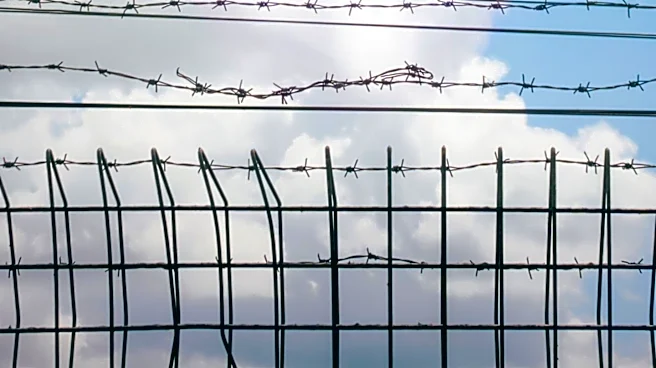
Senator and presidential candidate Flávio Bolsonaro announced his intention to adopt a 'Bukele standard' for public security in Brazil, aiming to significantly increase the number of federal prisons and implement tougher measures against criminal factions.
Speaking at a campaign launch event for Flávio Roscoe in Belo Horizonte, Bolsonaro stated his plan to create over half a million new prison vacancies and double the number of federal prisons from five to ten. He emphasized a 'heavy hand' approach, asserting that criminals should be treated harshly. This 'Bukele standard' refers to the policies implemented by El Salvador's President Nayib Bukele since 2022, which involve a state of exception and a hardline stance on public security. These measures in El Salvador have been associated with authoritarian actions, including arrests without judicial orders, collective trials, and detentions based on anonymous complaints. Bolsonaro also pledged to quadruple the minimum sentence for cell phone theft and for those who resell stolen goods, aiming to end impunity in Brazil.
Why It's Important?
Flávio Bolsonaro's proposal to adopt a 'Bukele standard' for Brazil's penal system signifies a potential shift towards more authoritarian and punitive approaches to crime. This could have profound implications for human rights, legal processes, and the overall justice system in Brazil. The 'Bukele standard,' as described, involves measures that bypass traditional judicial oversight, raising concerns about due process and the potential for arbitrary detentions. If implemented, such policies could lead to a significant increase in the incarcerated population, placing immense strain on resources and potentially exacerbating existing issues within Brazil's prison system. Furthermore, the emphasis on a 'heavy hand' and increased prison capacity, rather than addressing root causes of crime, could lead to a cycle of violence and incarceration without effectively improving public safety. The proposal also reflects a growing trend in some Latin American countries to emulate El Salvador's controversial security model, which has garnered both support for its perceived effectiveness in reducing crime and criticism for its human rights implications.
What's Next?
As the presidential campaign progresses, Flávio Bolsonaro's proposals on public security will likely be a central topic of debate. Other candidates and political parties will be pressed to articulate their own strategies for addressing crime, either by supporting or opposing the 'Bukele standard.' Civil society organizations, human rights groups, and legal experts are expected to scrutinize these proposals, highlighting potential constitutional and human rights concerns. The feasibility and cost of doubling federal prisons and creating half a million new vacancies will also be subject to economic analysis and public discussion. The outcome of the election will determine whether these hardline policies are pursued, potentially leading to significant reforms in Brazil's criminal justice system and a reevaluation of its approach to public safety and human rights.
Beyond the Headlines
The embrace of the 'Bukele standard' by a prominent Brazilian political figure like Flávio Bolsonaro reflects a broader societal frustration with crime and a desire for immediate, decisive action. This sentiment often leads to public support for strongman tactics, even if they come at the cost of civil liberties and due process. The appeal of such a model also highlights the perceived failures of traditional law enforcement and judicial systems to curb crime effectively. However, the long-term implications of adopting such a model could be severe, potentially leading to an erosion of democratic institutions, an increase in state-sponsored violence, and a deepening of social divisions. The focus on punitive measures without addressing underlying socio-economic factors that contribute to crime could also prove to be a short-sighted solution, creating new problems in the future. This political discourse also signals a potential shift in regional politics, where El Salvador's approach to security could become a template for other nations grappling with similar challenges.