



What's Happening?
The Minnesota Department of Natural Resources (DNR) has issued an advisory to boaters regarding significant challenges in launching and retrieving watercraft due to ongoing drought conditions across the state. Nearly all of Minnesota is experiencing some
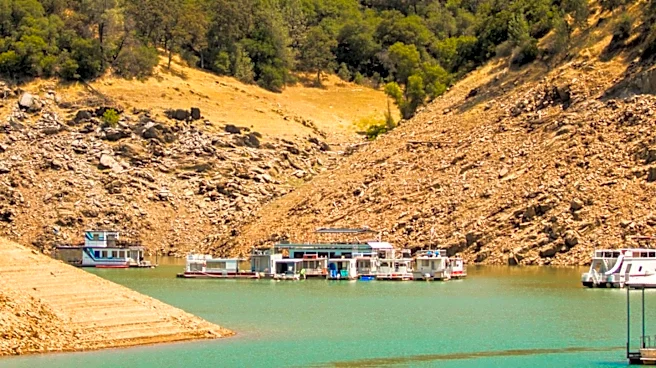
level of drought, with 48% classified under severe drought. These low water levels are particularly affecting public water access sites, making it difficult for boaters, especially those with larger watercraft and longer trailers, to use shallow boat ramps. The reduced water levels also expose previously submerged obstructions such as stumps, rocks, holes, and sandbars, which can damage boats and trailers. While the DNR is attempting to repair and extend boat ramps where feasible, the options for addressing these access issues are limited on many lakes. Boaters who use lifts or private docks are also advised to monitor water levels closely and consider early removal of their watercraft to prevent future complications. The DNR recommends a boater checklist for low-water conditions, including inspecting ramps, using a spotter, and avoiding power loading.
Why It's Important?
The widespread drought and resulting low water levels in Minnesota have significant implications for the state's recreational boating industry and local economies that rely on water tourism. Boating is a popular activity in Minnesota, known as the 'Land of 10,000 Lakes,' and restricted access can deter tourists and residents from engaging in these activities, potentially impacting businesses such as marinas, bait shops, and hospitality services. The increased risk of damage to watercraft from newly exposed obstructions could also lead to higher repair costs for boat owners and increased insurance claims. Furthermore, the need for specialized equipment for boat removal, as suggested by the DNR, indicates an additional financial burden for boaters and potentially a new demand for specialized lake service providers. The situation highlights the economic vulnerability of recreational sectors to environmental changes like prolonged drought and underscores the importance of water resource management for both ecological health and economic stability.
What's Next?
Boaters in Minnesota are advised to remain vigilant and proactive in monitoring water levels and planning their watercraft activities. The Minnesota DNR will continue its efforts to repair and extend boat ramps where possible, though these solutions are not universally applicable. Boaters should consult the DNR's public water access webpage for maps and information, and adhere to the recommended checklist for low-water conditions, which includes inspecting ramps for hazards, using a spotter, and avoiding power loading. The ongoing drought conditions suggest that these challenges may persist, requiring continuous adaptation from boaters and potentially leading to further advisories or restrictions. The situation may also prompt discussions on long-term infrastructure improvements for boat access points to better withstand fluctuating water levels, and could influence future water conservation policies in the state.
Beyond the Headlines
The challenges faced by Minnesota boaters due to low water levels underscore a broader environmental concern related to climate change and its impact on water resources. The severe drought conditions in a state historically abundant with water bodies highlight the increasing unpredictability of weather patterns. This situation could lead to a shift in recreational habits, with potential long-term consequences for the culture of outdoor activities in Minnesota. It also brings to light the interconnectedness of environmental health, recreational industries, and local economies. The need for boaters to adapt to changing conditions, such as learning new retrieval techniques or investing in specialized services, reflects a growing trend of individuals and industries having to adjust to the tangible effects of environmental shifts. This could also spur innovation in boat design or access infrastructure that is more resilient to varying water levels.