



What's Happening?
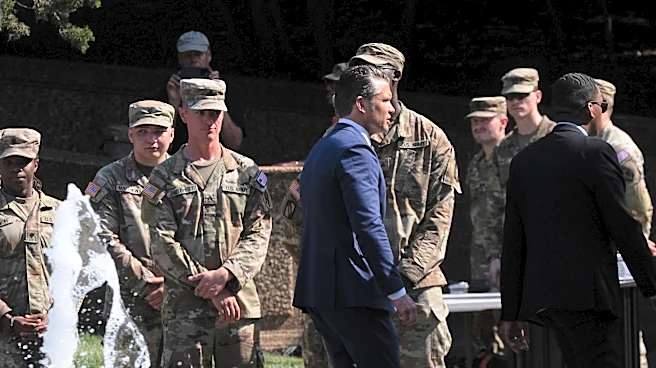
A U.S. soldier, Sgt. Michael Emmanuel Swinton, was killed in Iraq during a controlled detonation of an Iranian drone. The 30-year-old from Fayetteville, North Carolina, served nearly a decade in the military and was posthumously promoted to staff sergeant.
He will also receive a Bronze Star, Purple Heart, and Combat Action Badge. The incident occurred at an air base in Irbil, and the Army is investigating the circumstances of his death. Swinton leaves behind a 6-year-old son and a 4-year-old daughter. His family described him as a dedicated soldier whose family was the center of his world. The incident is part of renewed fighting between the U.S. and Iran, which has seen both sides launch strikes, resulting in casualties on both sides.
Why It's Important?
The death of Sgt. Swinton highlights the ongoing tensions and military engagements between the U.S. and Iran, which have significant implications for U.S. foreign policy and military strategy in the Middle East. The conflict has resulted in the loss of American lives and has escalated tensions in the region, affecting U.S. relations with allies and adversaries. The situation also impacts domestic politics, as President Trump faces pressure to manage the conflict and its consequences, including rising oil prices. The incident underscores the risks faced by U.S. military personnel stationed abroad and the broader geopolitical challenges posed by Iran's actions in the region.
What's Next?
The U.S. military is conducting an investigation into the circumstances of Sgt. Swinton's death. Meanwhile, the conflict between the U.S. and Iran continues, with potential for further escalation. The U.S. State Department has issued warnings about possible threats to American interests overseas. President Trump is under pressure to address the conflict's impact on U.S. foreign policy and domestic politics, particularly as it relates to military engagement in the Middle East and the economic implications of rising oil prices.