
What's Happening?
President Trump has been actively opposing offshore wind power projects, despite the United States having some of the best wind resources globally. In 2025, there were numerous illegal halts and cancellations
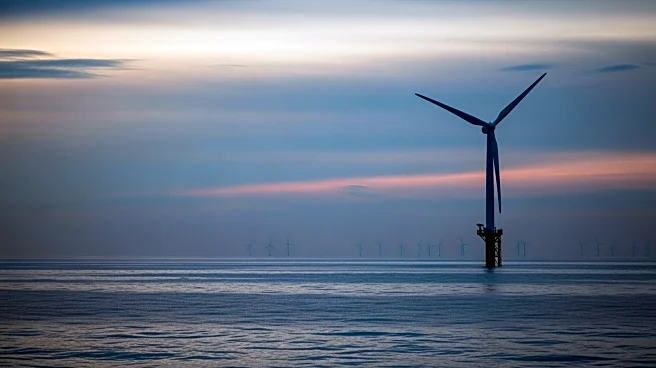
of offshore wind projects in the U.S., creating a challenging environment for the industry. Meanwhile, the UK continues to expand its offshore wind capacity, with investment firm KKR and renewable energy company RWE announcing two new projects, Norfolk Vanguard East and West, which will provide power for approximately 3 million UK homes. These projects, requiring a $15 billion investment, are set to be operational by 2029 and 2030, respectively.
Why It's Important?
The opposition to offshore wind projects in the U.S. under President Trump's administration contrasts sharply with the UK's proactive approach to renewable energy. This divergence highlights the potential missed opportunities for the U.S. in terms of clean energy development and economic growth. The UK's commitment to expanding its offshore wind capacity underscores its strategic focus on decarbonization and energy transition, which could position it as a leader in renewable energy. The U.S. risks falling behind in the global renewable energy race, potentially impacting its energy independence and economic competitiveness.
What's Next?
The future of offshore wind projects in the U.S. remains uncertain under the current administration. However, the growing global emphasis on renewable energy may pressure the U.S. to reconsider its stance. Stakeholders in the energy sector, including environmental groups and renewable energy companies, are likely to continue advocating for policy changes that support clean energy initiatives. The outcome of these efforts could significantly influence the U.S.'s role in the global energy landscape and its ability to meet future energy demands sustainably.
Beyond the Headlines
The resistance to offshore wind projects in the U.S. raises questions about the influence of political and economic interests on energy policy. The debate over renewable energy often involves complex considerations, including environmental impacts, national security concerns, and economic implications. The situation highlights the need for informed public discourse and transparent decision-making processes to balance these factors effectively. As the global energy landscape evolves, the U.S. may need to address these challenges to ensure a sustainable and secure energy future.