


What's Happening?
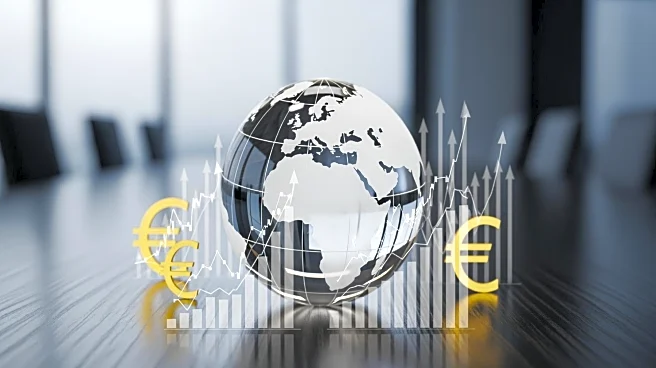
Euro zone finance ministers are set to discuss a series of proposals aimed at strengthening the international role of the euro. The European Commission has outlined several measures to make the euro more competitive and resilient against economic pressures
from the United States and China. Key proposals include removing internal trade barriers within the European Union, introducing a unified corporate law known as 'The 28th Regime', and establishing an EU-wide bank deposit guarantee scheme. Additionally, the creation of a Capital Markets Union is proposed to channel idle bank deposits into sectors like green energy and digital technology. Other measures include transforming the Euro Zone Bailout Fund into an EU institution, issuing more joint EU debt, and launching a digital euro to reduce reliance on U.S. payment systems.
Why It's Important?
The proposed measures are significant as they aim to enhance the euro's standing as a global currency, potentially reducing Europe's economic vulnerability to external pressures. By creating a more integrated financial system, the EU could attract more investment and increase the euro's use in international trade and finance. This could shift some economic power away from the U.S. dollar, which currently dominates global transactions. The introduction of a digital euro could also foster innovation in the EU's financial sector and provide consumers with more payment options. These changes could lead to a more balanced global economic landscape, with Europe playing a more prominent role.
What's Next?
The finance ministers' discussions will determine the feasibility and timeline for implementing these proposals. If agreed upon, the EU will need to navigate complex political and economic challenges to enact these changes. The success of these initiatives will depend on the cooperation of EU member states and their willingness to cede some national control in favor of a more unified European approach. The outcome of these discussions could influence future EU policies and its position in the global economy.