

What's Happening?
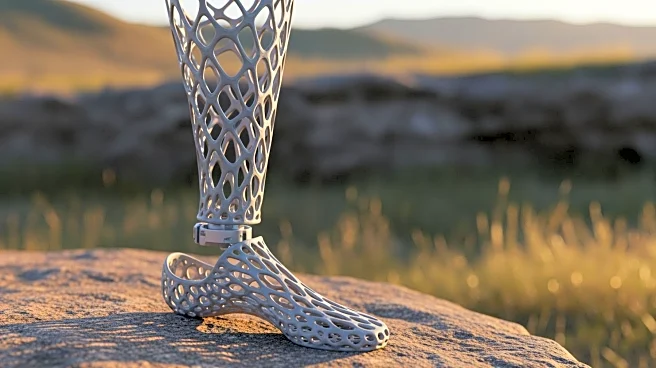
An endangered Egyptian vulture in the Golan Heights has been successfully rehabilitated and released back into the wild after receiving a 3D-printed prosthetic leg. The vulture, which lost its leg in a trap, underwent a groundbreaking rehabilitation process
involving the Nature and Parks Authority and the Wildlife Hospital at the Ramat Gan Safari. The prosthetic leg was custom-designed, marking a significant achievement in wildlife rehabilitation and conservation efforts.
Why It's Important?
This case represents a major advancement in wildlife conservation, demonstrating the potential of 3D printing technology in rehabilitating injured animals. The successful release of the vulture highlights the importance of innovative solutions in preserving endangered species and maintaining biodiversity. It also underscores the role of technology in addressing conservation challenges, offering hope for similar efforts in the future.
What's Next?
The vulture will be monitored using a GPS transmitter to track its adaptation to the wild. Conservationists will continue to study the impact of the prosthetic on the vulture's survival and behavior, potentially applying similar techniques to other injured wildlife. The success of this project may lead to increased investment in technology-driven conservation initiatives, encouraging further collaboration between wildlife experts and technology developers.
Beyond the Headlines
The use of 3D printing in wildlife rehabilitation raises ethical and practical questions about the extent to which technology should be used in conservation. While the prosthetic leg offers a new lease on life for the vulture, it also prompts discussions about the balance between human intervention and natural processes. This development may influence future conservation strategies, emphasizing the need for sustainable and ethical approaches to wildlife management.