








What's Happening?
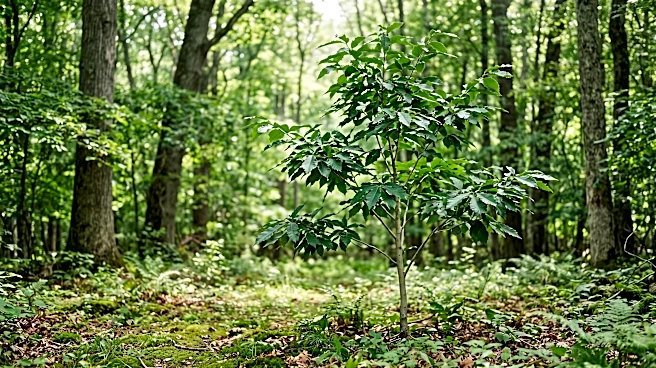
The U.S. Department of Agriculture (USDA) has deregulated 'Darling 54,' a blight-tolerant American chestnut, following a comprehensive six-year federal review. This decision, announced by American Chestnut Restoration, Inc. (ACR), marks a significant
step towards restoring the American chestnut species, which has been severely impacted by chestnut blight. The USDA's Animal and Plant Health Inspection Service (APHIS) concluded that Darling 54 is unlikely to pose a greater plant pest risk than conventional American chestnuts. The review process, initiated in January 2020 under the Plant Protection Act, involved extensive laboratory and field research, nationwide public comments, detailed plant pest risk analysis, and additional genomic and regulatory scrutiny, including addressing an event-naming discrepancy identified in 2023.
Why It's Important?
The deregulation of Darling 54 is a pivotal moment for ecological restoration efforts in the United States. The American chestnut was once a dominant tree species in Eastern U.S. forests, playing a crucial role in the ecosystem and economy. Its near-extinction due to blight had profound environmental consequences, including altered forest composition and reduced food sources for wildlife. This decision paves the way for the potential reintroduction of a blight-tolerant variety, which could help restore biodiversity, improve forest health, and provide economic benefits through timber and nut production. The rigorous federal review process, including public engagement and scientific scrutiny, underscores the importance of ensuring the safety and efficacy of genetically modified organisms before their widespread deployment in natural environments.
What's Next?
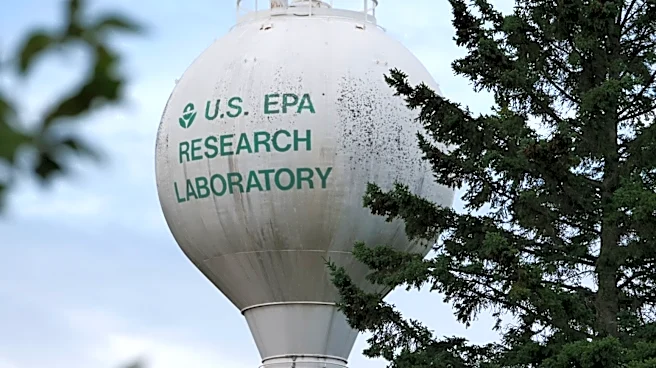
While the USDA-APHIS has completed its evaluation, Darling 54 still requires additional review by the Environmental Protection Agency (EPA) before it can be widely distributed. This subsequent review will assess any potential environmental impacts beyond plant pest risk. Once all regulatory hurdles are cleared, researchers and conservationists can proceed with broader planting initiatives, aiming to re-establish the American chestnut in its native range. The immediate benefits of this deregulation include enhanced opportunities for researchers to continue studying and propagating Darling 54. The long-term goal is to integrate this blight-tolerant tree into forest ecosystems, contributing to the ecological recovery of affected regions and potentially inspiring similar biotechnological approaches for other endangered species.
Beyond the Headlines
The deregulation of Darling 54 highlights the evolving role of biotechnology in conservation and agriculture. It represents a significant precedent for using genetic engineering to address ecological challenges, particularly those caused by invasive species or diseases. This case also brings to light the complex and multi-faceted nature of regulatory oversight for genetically modified organisms, involving multiple federal agencies and extensive public input. The success of Darling 54 could influence future policies and public perception regarding the use of genetic modification for environmental restoration. Furthermore, it underscores the dedication of non-profit organizations and scientific institutions in pursuing long-term, science-based solutions to large-scale ecological problems, demonstrating how collaborative efforts can lead to breakthroughs in conservation.