

What's Happening?
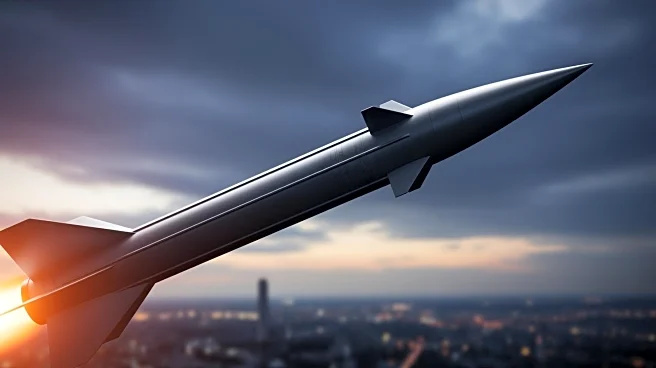
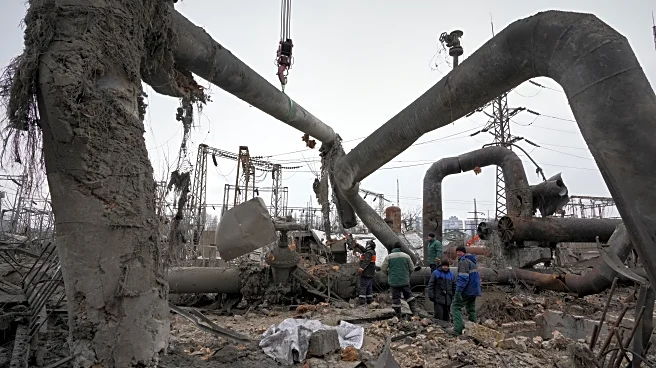
Russia has launched an Oreshnik Intermediate Range Ballistic Missile targeting a gas storage facility near Lviv, Ukraine. This strike resulted in regional blackouts and is part of a series of coordinated aerial attacks by Russia on Ukrainian infrastructure.
The Oreshnik missile, capable of carrying multiple warheads, is difficult to intercept due to its high speed and range. This deployment follows recent demonstrations of the missile in Belarus, ostensibly as a strategic move rather than a direct military tactic. Ukrainian President Volodymyr Zelenskyy had warned of potential significant Russian strikes, indicating Ukraine's awareness of Russia's military maneuvers.
Why It's Important?
The use of the Oreshnik missile underscores Russia's intent to project power and maintain its status as a nuclear-armed nation. This action serves as a psychological tool in Russia's broader strategy against Ukraine and the West. The strike comes amid a series of setbacks for Russia, including the U.S. raid in Venezuela and Ukrainian strikes on Russian infrastructure. These events highlight Russia's strategic vulnerabilities and its limited ability to influence global military actions. The missile strike on Lviv is a demonstration of Russia's continued aggression and its efforts to assert dominance despite recent challenges.
What's Next?
The ongoing conflict and Russia's military actions are likely to prompt further international responses, including potential sanctions and increased military support for Ukraine from Western allies. Ukraine may continue to enhance its defense capabilities and seek additional intelligence support to anticipate future strikes. The international community will closely monitor Russia's military activities, particularly its use of advanced weaponry like the Oreshnik missile, to assess the broader implications for regional and global security.
Beyond the Headlines
The deployment of the Oreshnik missile in Belarus and its use against Ukraine reflect deeper strategic calculations by Russia. This move may be aimed at deterring Western intervention and reinforcing Russia's influence in Eastern Europe. The psychological impact of such strikes on the Ukrainian population and the international community is significant, as it highlights the ongoing threat posed by Russia's military capabilities. The situation also raises questions about the effectiveness of international diplomatic efforts to resolve the conflict and the potential for escalation.