







What's Happening?
Research conducted after the 2023 Maui wildfires has revealed a significant link between exposure to elevated levels of metal mixtures and adverse lung function in residents. A study, published in the Proceedings of the National Academy of Sciences on September
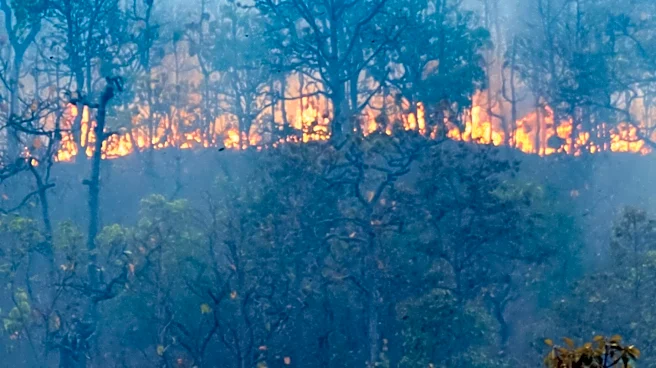
28, 2026, involved approximately 1,400 adult residents of Maui, six to eighteen months post-disaster. Participants exhibited substantially higher concentrations of certain metals in their urine compared to national averages. For instance, antimony levels were nearly 40 times higher, manganese nearly four times higher, and barium and arsenic more than twice as high. The highest metal concentrations were found in individuals residing in areas most severely impacted by the wildfire. The study indicates that the burning of urban infrastructure, including homes, vehicles, and electronics, during wildfires can release potentially toxic metals into the environment, leading to prolonged exposure that can harm lung function. The elevated metal burden persisted for up to 18 months after the event, with arsenic, cadmium, and copper being the primary contributors to impaired lung function.
Why It's Important?
This research highlights a critical, long-term public health concern associated with wildfires, particularly those occurring at the wildland-urban interface. The findings suggest that the health impacts of wildfires extend far beyond the immediate smoke exposure, encompassing prolonged exposure to toxic metal mixtures. This has significant implications for healthcare planning and environmental policy in regions prone to such disasters. The study underscores the necessity for extended health monitoring and environmental sampling that goes beyond air quality assessments to fully grasp the health effects. Communities and individuals in wildfire-prone areas, especially those where urban and wildland areas converge, face a heightened risk of chronic respiratory issues and other health problems due to these metal exposures. This could lead to increased healthcare burdens and a diminished quality of life for affected populations, emphasizing the need for comprehensive post-disaster health strategies and stricter regulations on materials used in construction in high-risk zones.
What's Next?
The research team plans to further investigate the specific sources of these metal exposures to determine which contaminants persist, their origins, and their long-term health implications. This next step is crucial for developing targeted interventions and preventative measures. The findings suggest that longer-term health monitoring and environmental sampling, extending beyond immediate air quality concerns, are necessary to fully capture the health effects of wildfires. Policymakers and public health officials may need to consider implementing more robust post-wildfire health surveillance programs and environmental remediation efforts. Additionally, there could be a push for stricter building codes and material regulations in wildland-urban interface areas to minimize the release of toxic substances during future fire events. The study also implies a need for increased public awareness regarding the hidden dangers of wildfire aftermath, encouraging residents to seek long-term health evaluations.
Beyond the Headlines
The study's findings reveal a deeper, less obvious consequence of wildfires: the fundamental alteration of how contaminants move through the environment when a disaster burns through a community. This suggests that the ecological and health impacts are more complex and enduring than previously understood. The presence of high levels of metals like antimony, used in batteries and flame retardants, points to the pervasive nature of modern materials in our environment and their potential to become hazardous when subjected to extreme events like wildfires. This raises ethical questions about urban planning, material science, and disaster preparedness, urging a re-evaluation of what constitutes 'safe' construction and development in fire-prone regions. The long-term health effects, particularly on lung function, could lead to a silent public health crisis, necessitating a paradigm shift in how we approach post-disaster recovery and environmental health.