





What's Happening?
Israeli Prime Minister Benjamin Netanyahu has announced plans to pursue direct peace talks with Lebanon, following intense pressure from European leaders to halt Israeli attacks on Lebanon. The announcement comes after a ceasefire was declared between
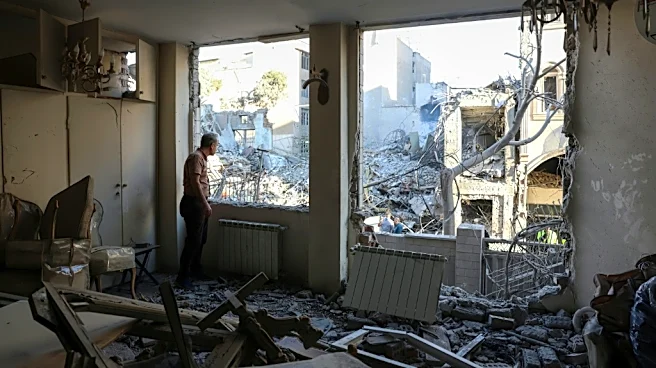
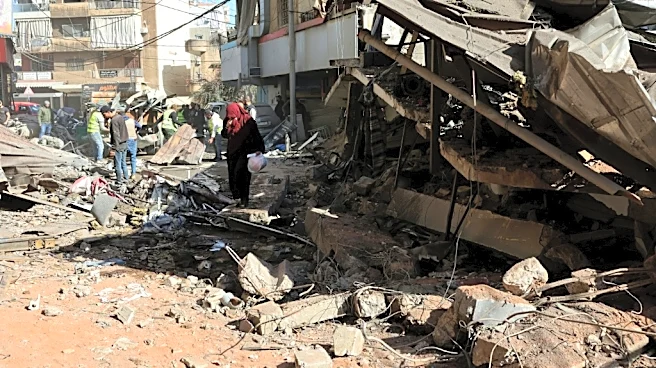
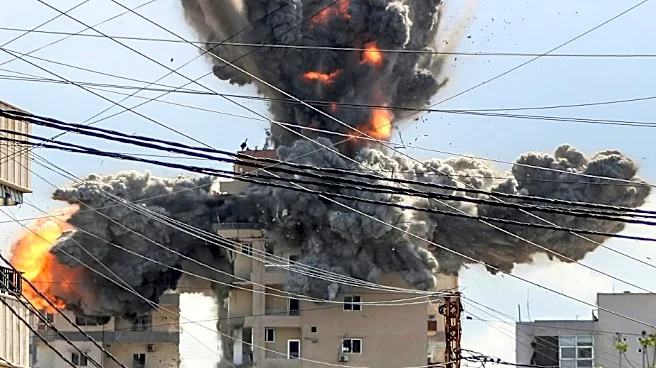
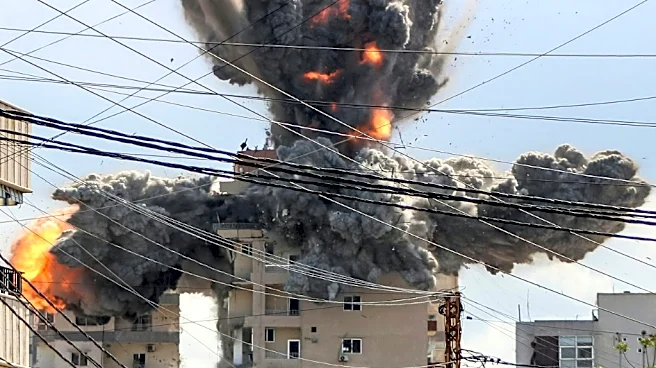
the U.S. and Iran, aimed at unblocking the Strait of Hormuz. Despite the ceasefire, Israel has continued its military operations in Lebanon, resulting in significant casualties. European leaders, including those from the UK, France, and Germany, have criticized Israel's actions, urging a diplomatic resolution to the conflict.
Why It's Important?
The decision to engage in peace talks marks a significant diplomatic shift for Israel, potentially easing tensions in the region. The ongoing conflict has resulted in substantial loss of life and has drawn international condemnation, highlighting the urgent need for a peaceful resolution. Successful negotiations could lead to the disarmament of Hezbollah and improved relations between Israel and Lebanon, contributing to regional stability. However, the continuation of Israeli strikes poses a risk to the peace process and could undermine international efforts to mediate the conflict.
What's Next?
The peace talks, led by Israel's ambassador to the U.S., are expected to focus on disarming Hezbollah and establishing peaceful relations. The outcome of these talks will be closely watched by the international community, with potential implications for U.S.-Israel relations and broader Middle Eastern geopolitics. The success of the negotiations will depend on the willingness of both parties to compromise and the ability of international mediators to facilitate a lasting agreement.