

What's Happening?
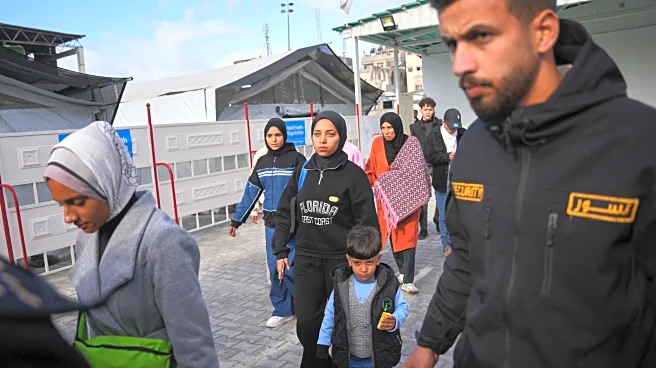
Israel is preparing to reopen the Rafah crossing on the border with Egypt, allowing residents of Gaza to leave for Egypt and return to the Strip. This development is part of a cease-fire deal brokered by President Trump, which is awaiting formal approval
from Israeli Prime Minister Benjamin Netanyahu's government. The reopening of the crossing is significant as it provides a critical outlet for Gazans amidst ongoing conflict. Under the proposed plan, individuals exiting Gaza will be screened remotely, while those entering will undergo physical checks at an additional post controlled by the Israel Defense Forces (IDF) within Gaza. This move comes in the wake of heightened tensions following a large-scale attack by Hamas on Israel, which resulted in significant casualties and a subsequent declaration of war by Israel.
Why It's Important?
The reopening of the Rafah crossing is a crucial development in the ongoing Israel-Gaza conflict, as it offers a potential humanitarian relief channel for Gazans. The ability to move in and out of Gaza could alleviate some of the economic and social pressures faced by the residents, who have been severely affected by the conflict. The crossing's reopening also represents a diplomatic effort to stabilize the region, as it is part of a cease-fire agreement facilitated by President Trump. This move could potentially ease tensions and foster dialogue between the conflicting parties. However, the security measures involved, such as remote screenings and physical checks, highlight the ongoing security concerns and the delicate nature of the situation.
What's Next?
The next steps involve the formal approval of the cease-fire deal by Prime Minister Netanyahu's government. If approved, the reopening of the Rafah crossing could lead to further negotiations and potential peace talks between Israel and Hamas. The international community, including aid organizations, will likely monitor the situation closely to assess the impact on humanitarian efforts in Gaza. Additionally, the security protocols at the crossing will be crucial in maintaining stability and preventing further escalations. The response from major stakeholders, including regional powers and international bodies, will be pivotal in shaping the future dynamics of the Israel-Gaza conflict.