






What's Happening?
The Fi We Children Foundation (FWCF) has responded to the announcement of a revised National Student Dress and Grooming Policy by Jamaica's Minister of Education and Youth, Dr. Dana Morris Dixon. While welcoming the policy, FWCF emphasizes the need for
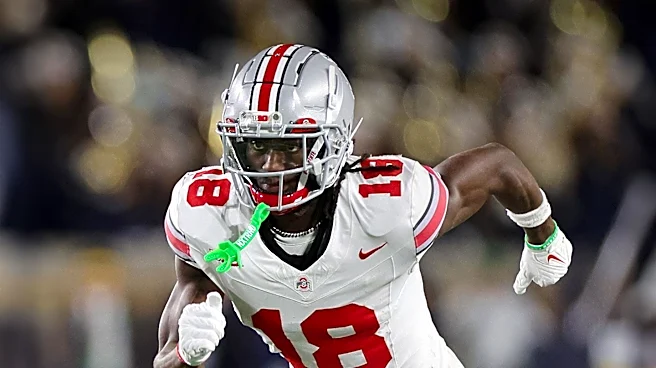
the new framework to protect students' rights and prevent arbitrary enforcement of appearance standards. The foundation argues that the current system grants schools broad discretion, leading to students being denied access over issues like belt buckles, uniform length, and hairstyles. FWCF specifically highlights concerns about Black boys being required to alter their hair to meet subjective definitions of 'neat' or 'well-groomed,' which they view through the lens of student rights and cultural identity. They contend that a 'rules are rules' approach cannot justify requirements that are arbitrary, discriminatory, or disproportionate, especially when they impact a student's dignity, identity, education, and freedom of expression.
Why It's Important?
This development is important as it addresses the balance between school discipline and student rights, particularly concerning cultural identity and freedom of expression within educational settings. The FWCF's stance underscores a broader societal discussion about Eurocentric beauty standards and their impact on minority groups, even in a U.S. context where similar debates about hair discrimination in schools have occurred. The call for a review of the legislative framework, including the Education Act, to establish clearer national standards, could set a precedent for how educational policies are formulated and implemented, ensuring they are child-centered and rights-based. This could influence how U.S. educational institutions approach similar issues, promoting more inclusive and equitable grooming policies that respect diverse cultural backgrounds and individual identities.
What's Next?
FWCF is advocating for the final National Student Dress and Grooming Policy to be clear, transparent, child-centered, rights-based, and consistently applied across all schools. They are also pushing for a review of the legislative framework, including the Education Act, to address the broad discretion currently given to school administrators and to establish clearer national standards. Parents and guardians who encounter issues with children being denied school access or penalized due to grooming requirements are encouraged to contact FWCF's legal team for support. The outcome of this advocacy could lead to significant changes in how school grooming policies are developed and enforced, potentially influencing similar discussions and policy reforms in other countries, including the U.S., regarding student rights and cultural identity in education.
Beyond the Headlines
Beyond the immediate policy changes, this situation highlights the deeper ethical and cultural dimensions of school regulations. The FWCF's argument that hair can be an important part of identity, culture, and self-expression for Black boys and girls challenges the notion of universal grooming standards. This resonates with ongoing discussions in the U.S. about systemic biases and the need for culturally sensitive policies in education. The emphasis on prioritizing academic achievement over appearance-based restrictions, as exemplified by the Jamaica College's relaxed hair grooming policy and the achievements of Guyanese student J’kell Whyte, suggests a shift towards a more holistic view of student development. This could trigger long-term shifts in educational philosophies, moving away from rigid, potentially discriminatory rules towards policies that foster inclusivity, self-esteem, and academic excellence.