
What's Happening?
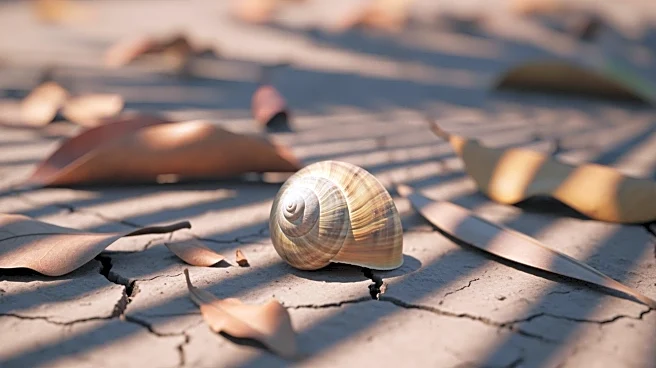
A new study highlights the alarming rate of extinction among island land snails, particularly in the Pacific region. Researchers, led by Robert Cowie from the University of Hawai'i, report that extinction rates
on high volcanic islands range from 30% to 80%. The primary causes are habitat loss and invasive species introduced by humans. The study emphasizes the unique biodiversity of these snails, which are often identified through preserved shells. Conservation efforts, including captive breeding, are underway but face significant challenges due to ongoing environmental threats.
Why It's Important?
The extinction of island land snails is a critical indicator of broader environmental degradation and biodiversity loss. These snails play essential roles in their ecosystems, and their decline signals potential ecological imbalances. The study underscores the urgent need for conservation strategies to protect these species and their habitats. The findings also highlight the impact of human activities on biodiversity, prompting a reevaluation of conservation priorities and policies. Protecting these snails is vital for maintaining ecological health and preserving the natural heritage of island ecosystems.