
What's Happening?
The Expedition 75 crew aboard the International Space Station (ISS) has initiated a week of intensive biotechnology research, spacesuit maintenance, and cargo operations. NASA flight engineer Anil Menon
is cultivating human lung epithelial cells to understand their growth and maintenance in microgravity, aiming to improve future space biology and disease therapies. Concurrently, CSA (Canadian Space Agency) astronaut Joshua Kutryk is utilizing the Acute Care Testing in Space (ACTIS) facility to analyze blood samples for crew health monitoring. NASA flight engineers Jessica Watkins and Luke Delaney are collaborating on studies to prevent space-induced blood flow abnormalities, such as fluid shifts towards the head, using devices like Ultrasound 3 and specialized Thigh Cuffs. Additionally, Watkins and Delaney performed comprehensive checks and servicing on spacesuit components, including assembling helmets, arms, legs, and installing communication gear, as well as removing batteries from emergency jet packs. These activities underscore the continuous effort to advance scientific understanding and maintain operational readiness in orbit.
Why It's Important?
The biotechnology research conducted on the ISS is crucial for both long-duration space missions and advancements in Earth-based medicine. Studying human lung cells and blood flow in microgravity provides unique insights into physiological responses that are impossible to replicate under Earth's gravity. These findings can lead to improved health protocols for astronauts, mitigating risks associated with extended space travel, and potentially developing novel treatments for various diseases on Earth. For instance, understanding how lung cells behave in space could inform new therapies for respiratory conditions. The cardiovascular studies aim to protect astronauts from fluid shifts, a common issue in microgravity, with potential applications for patients experiencing similar conditions on Earth. Furthermore, meticulous spacesuit maintenance ensures the safety and operational capability of astronauts during spacewalks, which are vital for station upkeep, repairs, and scientific deployments, directly impacting the success and longevity of the ISS and future human space exploration endeavors.
What's Next?
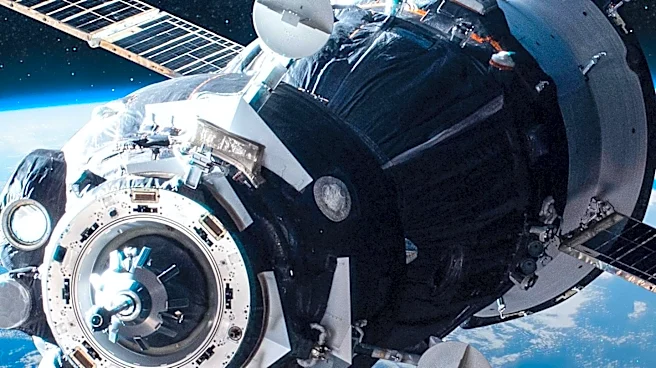
As the week progresses, the Expedition 75 crew will continue their biotechnology experiments, with ongoing monitoring and data collection from the lung cell cultures and blood flow studies. The research samples from completed experiments are being transferred from station science freezers into portable freezers and stowed aboard the SpaceX Dragon cargo spacecraft, which is nearing the end of its stay. The Dragon will soon return to Earth for a splashdown in the Pacific Ocean, where NASA and SpaceX personnel will retrieve the cargo and its payloads for detailed analysis. This retrieval is a critical step for researchers to examine the results of the microgravity experiments and translate them into actionable insights. Future steps will involve further analysis of the collected data, publication of findings, and the development of new experimental protocols based on the current week's results, contributing to a continuous cycle of scientific discovery and technological advancement in space.
Beyond the Headlines
The ongoing research on the ISS, particularly in biotechnology, highlights a broader shift towards utilizing space as a unique laboratory for fundamental biological and medical questions. The ability to grow human cells and study physiological processes in microgravity offers an unparalleled environment to understand disease progression and tissue regeneration without the confounding effects of gravity. This could lead to breakthroughs in personalized medicine, drug discovery, and regenerative therapies that are not feasible on Earth. The meticulous attention to spacesuit maintenance also underscores the complex interplay between human ingenuity and technological reliability in extreme environments. Beyond immediate mission objectives, these efforts contribute to the long-term vision of human presence in space, including potential lunar and Martian settlements, where self-sufficiency and advanced medical capabilities will be paramount. The ISS serves as a vital precursor, testing the limits of human endurance and technological resilience for humanity's future in the cosmos.