

What's Happening?
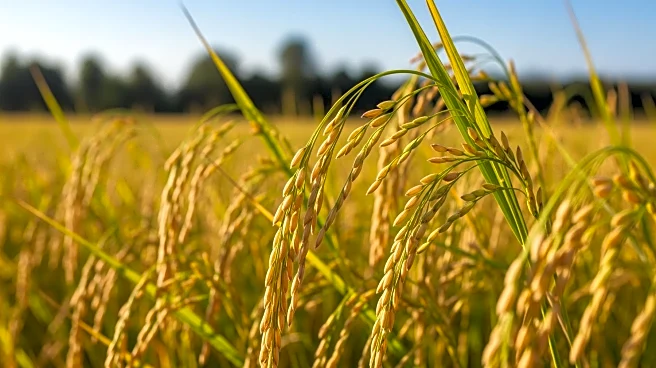
The Philippines' Department of Agriculture Secretary, Francisco Tiu Laurel Jr., has announced that the country's food supply is stable until July. This assurance comes amid global volatility affecting commodity prices. The National Food Authority currently
holds 400,000 metric tons of rice, and the ongoing harvest season is expected to bolster supplies further. Other food categories, such as vegetables and pork, also remain stable, with cold storage facilities stocked and local production increasing. The department is monitoring market prices and considering measures to keep rice prices in check, including potential caps on imported rice.
Why It's Important?
The stability of the food supply in the Philippines is crucial for maintaining economic and social stability, especially in the face of global market fluctuations. Ensuring a steady supply of essential commodities like rice helps prevent price spikes that could disproportionately affect low-income households. The government's proactive measures to manage food inventories and prices are vital for safeguarding food security and supporting the agricultural sector. This stability also provides a buffer against potential disruptions caused by external factors, such as geopolitical tensions or natural disasters, which could impact food availability and affordability.
What's Next?
The Department of Agriculture will continue to monitor global developments that may affect freight and transport costs, which could, in turn, impact local food prices. The government is also focusing on expanding cold storage facilities and enhancing local production to further strengthen food security. As the peak harvest season approaches, the department will assess the need for additional imports to maintain supply levels. The continuation of the P20 rice program for target beneficiaries until 2028 underscores the government's commitment to ensuring affordable food access for all citizens.